Cal Raleigh’s 60 Home Runs: Reading the Catcher Slugger Market
 Available in US
I have been thinking about catcher home run props the way I used to think about goaltender props in NHL betting – as a market the books take less seriously than they should, with structural biases that smart money can read. That view crystallised over Raleigh’s 2025. The 60 home runs were not just a personal milestone or a Mariners franchise moment. They were a market shock that exposed how badly mispriced catcher HR props had been for years, and how much room there still is for punters who specialise in the position. The catcher slugger market is one of the most consistently undervalued corners of the to-hit-a-HR space, and 2025 is the cleanest evidence of that I have seen in my time covering the league.
The Number, and Why It Matters Beyond the Number
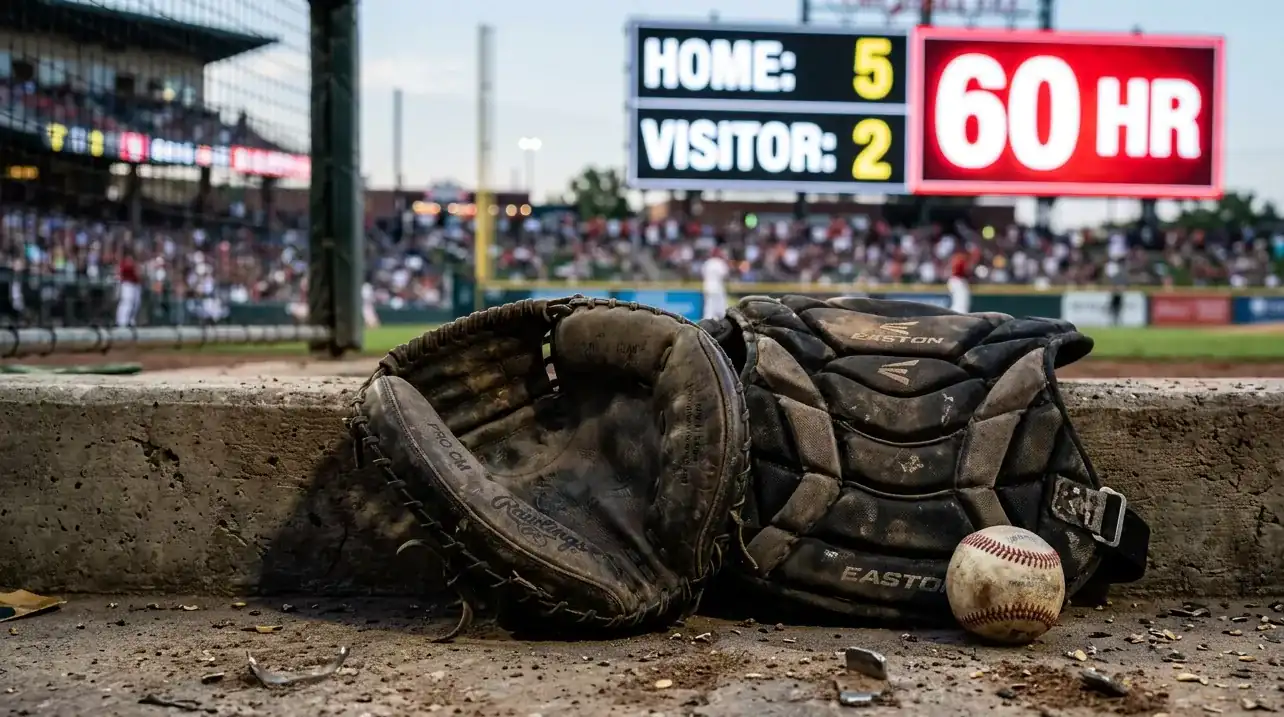
Cal Raleigh led MLB in 2025 with 60 home runs – the all-time record for a catcher, a switch-hitter, and the Mariners franchise. Sixty home runs from any position is rare. Sixty from a catcher is something baseball has not seen in 150 years of the sport, full stop. The previous catcher record had stood at 48 – Salvador Perez in 2021, and before him Javy Lopez in 2003. Raleigh did not just break the record; he obliterated it by 12 home runs.
The reason that matters for HR props is not that we should expect a 60-homer catcher every year. We should not. What we should expect is that a position the books have historically priced as a low-power filter is going to generate occasional outlier seasons, and those outliers are going to come from a small, identifiable pool of high-skill catchers who can also hit. Raleigh, Salvador Perez when healthy, William Contreras, the next generation of catching prospects with above-average barrel rates – these are the names where catcher HR props consistently price too long.
Why the Books Underprice Catcher Power
I think there are three reasons, and understanding them is half the edge.
First, lineup positioning. Catchers usually bat sixth, seventh, or eighth in their lineups. That means fewer plate appearances per game on average than a leadoff or three-hole hitter. Books price HR props largely on per-game probability, and lower PA volume means lower fair-value HR probability, full stop. That is correct as far as it goes. The mistake the books make is in assuming the per-PA HR rate of a catcher is closer to league average than it actually is for the elite of the position. Raleigh, hitting in the heart of the Mariners order in 2025, was producing PAs at roughly 4.4 per game with a per-PA HR rate that comfortably cleared 6%. That combination should price his HR prop within a tick of any non-catcher slugger; it usually does not.
Second, rest days. Catchers play maybe 130 to 140 games a season, not 155 to 160. Books have to model that workload management correctly, and the rough rule of thumb is that the catcher’s prop is shorter on the days he plays and unavailable on the days he sits. Where the books struggle is the day-to-day uncertainty, particularly mid-season, of who the starting catcher will actually be. That uncertainty gets baked into prices in a way that consistently widens the line.
Third, comparative pricing. The books partly anchor a hitter’s HR price to other players in similar slots and roles. If the rest of the catching pool prices long, the elite catcher prices long-by-default – even when his individual profile says otherwise.
What Raleigh’s Market Looked Like Before and After
Through the first month of 2025, Raleigh’s pre-season to-hit-a-HR price on standard-matchup home games at Seattle was around +280 to +320. By August it had compressed to +180 to +210. That was a big move, and it was the right direction, but it was still wider than equivalent prices on full-time corner-outfield power bats with similar barrel profiles. The market was catching up but still pricing him with a residual catcher discount of roughly 40 to 60 cents on the moneyline.
I made decent money in the second half of 2025 by treating Raleigh as a non-catcher for HR-prop purposes – pricing him on his per-PA underlying skill, then comparing to the displayed line. Going into 2026 the books have closed most of that gap on Raleigh personally, but the broader catcher-discount logic still applies to other names. Will Smith with the Dodgers, Adley Rutschman in Baltimore, William Contreras in Milwaukee – these are the bats where the catcher discount still shows up in pricing, and they are the bats where the structural edge remains.
Where Catcher Power Compares in the 2025 Power Charts
To put Raleigh’s season in proper context, the surrounding power leaderboard helps. Kyle Schwarber led NL/MLB 2025 in RBI with 132 – the first Phillies player to lead in RBI since 2008. Schwarber is the prototypical pure power slugger, full-time DH-rotation, mid-lineup, with no positional drag on his HR pricing at all. The market prices him exactly where the data says he should sit. The interesting comparison is that in 2025 Raleigh out-homered Schwarber and a number of other pure sluggers, while still carrying a catcher’s price discount on his to-hit-a-HR markets. That spread is the structural inefficiency.
The lesson is not “back every catcher”. It is “be willing to back the right catcher when the underlying skill metrics – barrel rate, hard-hit rate, expected slugging – match a non-catcher slugger but the price still reflects the catcher discount”. Most catchers fail that test. The two or three who pass it in any given season are the ones to focus on.
The Workload Question
One question I get asked a lot is whether catcher HR props are dangerous because the player might rest. The honest answer is that they are no more dangerous than HR props on any other player who occasionally rests. Most operators void the bet if the player does not start. Some keep the bet live if the player enters as a pinch-hitter. The rules vary by book, and they are worth checking before you place the bet, but the workload risk is mostly not a betting-edge problem.
The bigger workload issue is on stretches of three games in three days where the manager will give the catcher a day off, and the question is which of the three days. Most managers tip their hand by the third day after consecutive starts, and that is the day to fade. The first or second of a three-game series, where the catcher is fresh, is generally the safest day to back a catcher HR prop.
The same dynamic shows up in a more extreme form across the 30/30 club, where workload, lineup positioning, and skill mix all interact in ways the market is still working out. The seven 30/30 hitters in 2025 and what that means for HR prop diversification is the natural next read for anyone trying to build a broader HR-prop portfolio.
Reading the Position Forward
Looking forward into 2026 and beyond, my watchlist for catcher HR props is built around three questions for each candidate. Does the catcher’s underlying barrel rate clear the league HR-rate threshold I would apply to a non-catcher? Does his lineup slot regularly put him in mid-order or higher? Does his manager’s workload management leave enough starts to build a meaningful HR sample? When all three answer yes, the catcher discount in the market is a real edge. When any of them answer no, the discount may be priced about right or even too short.
By those criteria, Raleigh remains the cleanest standing example, but the pool changes year to year as new prospects come through. Tracking it is the closest thing to a true free lunch I have found in the HR-prop market, and Raleigh’s 2025 is a good reminder of why specialised position-by-position reading matters more than a single average HR-rate model.
The Catcher Edge in a Single Sentence
If I had to compress this into one rule for HR-prop punters, it would be: when an elite catcher’s barrel rate matches a corner outfielder’s, his HR price almost never matches the corner outfielder’s, and that is the bet. It will not be every catcher. It will not be every game. But the spots where the rule applies generate a small, repeatable, structural edge that the market has been slow to close even after a season as loud as Raleigh’s 60.
Why are catcher HR props undervalued?
Three reasons: lineup slot is usually 6 to 8, which lowers PA volume; workload management means catchers play 130 to 140 games rather than full schedules; and books anchor catcher pricing to the position’s average, which under-rates the elite of the position. Combined, those factors create a 30 to 60 cent moneyline discount on truly elite catcher bats that does not get fully closed even when the player’s underlying skill matches a non-catcher slugger.
Should I expect another 60-homer catcher season any time soon?
No. Raleigh’s 60 is the all-time catcher record by a 12-home-run margin and reflects an unusual combination of skill, park fit, and lineup support. The realistic expectation for an elite catcher is 30 to 40 home runs in a healthy season, with occasional outlier years. The point is not to wait for another 60; the point is to bet the structural discount on every elite catcher’s standard HR markets.
What happens to a catcher HR prop if the player does not start?
Most major operators void the bet and refund stake if the player does not start. Some keep the bet live if the player enters as a pinch-hitter. The rules vary, so check the operator’s terms before placing the bet. The void rule is friendly for punters because it removes downside on rest days, making catcher HR props more bettable than the workload concern would suggest.
Created by the ”mlb Prop Bets Home Runs” editorial team.