The $200 Prop Limit and What the 2025 Guardians Scandal Changed
 Available in US
Table of Contents
- The afternoon a $200 cap quietly redrew the American prop bet landscape
- What actually happened in Cleveland
- Why pitch-level betting was always the structurally weak link
- The mechanics of the $200 cap and the parlay ban
- What changed for home run props specifically
- The integrity monitoring stack and what Manfred actually controls
- Why this matters to a British punter who could not have placed the bets anyway

The afternoon a $200 cap quietly redrew the American prop bet landscape
I was not at my desk when the news broke in November 2025. I was making coffee, half-listening to the radio, and the headline came through almost as an aside: leading American sportsbooks had, with strikingly little fanfare, agreed a hard $200 limit on individual pitch-level prop bets and removed those props from any parlay structure. By the time I had read the second wire report, the implications were already arriving like dominoes. This was not a tweak. This was Major League Baseball using its leverage on the regulated American sportsbooks to redraw the perimeter of an entire prop category in response to one of the cleanest match-fixing cases the sport has produced in a generation.
I have been writing about MLB props for British punters for eleven years. The vast majority of regulatory shifts that hit the American market wash over British readers without much practical effect — different operators, different licensing regime, different markets available. This one is different, and not for the reasons you would assume. The Cleveland Guardians scandal and the response to it have changed the way the league talks about, monitors, and constrains betting markets across the whole of professional baseball. That has knock-on effects on what UK-licensed sportsbooks will be willing to post, what data flows from the league to the market, and what the prediction-market alternatives look like. If you bet MLB home run props from London, Manchester, or anywhere else in the UK, this story is part of the architecture you are betting inside. You should understand it.
What follows is a working punter’s account of what happened, what changed, and what it means for anyone betting baseball seriously in 2026. I am not a lawyer, I am not an integrity investigator, and I will not be naming or speculating about anyone whose case has not been resolved. What I can do is walk through the mechanics of the scandal, the mechanics of the response, and the mechanics of the markets affected. That is enough to make sense of where things sit now.
What actually happened in Cleveland
Picture, if you will, the most unglamorous match-fixing scheme imaginable. No fix on the outcome. No collusion with the opposition. No thrown game, no shaved score, no injured key player. Just a relief pitcher and a starting pitcher on the Cleveland Guardians, two players whose names became central to a federal investigation, allegedly arranging for specific pitches in specific at-bats to land in particular ways. A first-pitch ball when the price was right. A particular pitch type when the betting line on it had moved. The unit of currency was not the game, or the inning, or even the at-bat. It was the individual pitch.
The two pitchers at the centre of the case were Emmanuel Clase, the Guardians’ standout closer, and Luis Ortiz, a starter on the same roster. The structural feature of the scheme that made it possible was the existence of pitch-level prop markets on American sportsbooks: bets on whether the very next pitch would be a ball or a strike, whether it would be a particular pitch type, whether it would result in a specific count outcome. These are markets where a single human being on the field has effectively complete control over the outcome of a single bet — a far cleaner controllable input than anything at the at-bat or game level.
The scheme came apart through exactly the integrity-monitoring mechanism that Major League Baseball had been building for years. Suspicious betting patterns on specific pitches, flagged by data-sharing agreements between sportsbooks and league integrity teams, surfaced statistical anomalies that pointed to non-random outcomes correlated with unusually high stakes. Once the patterns were identified, the federal investigation followed quickly. The case became public in the autumn of 2025, both pitchers were placed on non-disciplinary leave, and the league moved to act on the broader market exposure that had made the scheme economically attractive in the first place.
I want to be careful with the language here. The case is the subject of legal proceedings I will not pretend to understand in detail. What is settled, in the sense relevant to this article, is that the betting markets in question existed, that the alleged conduct centred on pitch-level outcomes, and that the league’s response targeted that structural feature directly.
Why pitch-level betting was always the structurally weak link
Anyone who has spent time around prop markets had been quietly wondering when this kind of case would surface. The economics of pitch-level betting are unforgiving in a way that game-level and even at-bat-level betting are not. A single pitch is a single decision by a single individual, executed in roughly a quarter of a second, with an outcome that the person making the decision can determine with near-perfect control. That is not a betting market. That is a coin flip with a person on one side of it.
Compare this to a home run prop. For a home run prop to be fixed, you would need a pitcher to deliberately serve up a pitch fat enough to be hit, the hitter to recognise the moment, the contact to actually produce a home run rather than a long fly out, the wind to cooperate, the fielder not to make a wall-climbing catch. The chain of contingency makes match-fixing a home run prop economically unrewarding for the conspirators. A first-pitch ball is a single decision. There is no chain of contingency. There is just a foot, a glove, a fingernail of grip pressure, and an outcome.
Sharp punters and integrity professionals had been making this argument for years before the scandal broke. The Topendsports community noted as far back as 2022 that the granularity of pitch-level betting created an integrity exposure no game-level market could match. Several state regulators in the United States had already imposed restrictions or bans on pitch-level markets before the federal scandal forced a national consolidation. What the Clase and Ortiz case did was make the argument unanswerable. The risk was not theoretical any more. It had occurred, on a roster, with documented financial exchanges, in a market a regulated American sportsbook had voluntarily chosen to post.
The Commissioner, Rob Manfred, has been articulate on the league’s posture during this period. “I think that the most important undertaking and really the bedrock of our relationship with the sportsbooks is the ability to monitor betting activity. The ability to discern inappropriate patterns is really, really important.” That sentence, delivered at an owners’ meeting press conference in 2025, was the public framing of what was already happening behind the scenes. The league did not want pitch-level betting eliminated outright at first; it wanted the visibility into betting flows that made monitoring possible. When monitoring detected the scheme, the response was to remove the structural feature rather than to trust monitoring alone going forward.
Manfred has also been candid about the broader uncomfortable position the league sits in. “We didn’t ask to have legalised sports betting. It kind of came, and that’s the environment in which we operate. Now we don’t have a lot of choice about that.” That candour matters because it tells you the league’s true preference is for less prop exposure, not more. Every regulatory action since the scandal has been consistent with that preference: tighter controls, narrower markets, more data-sharing, more limits.
The mechanics of the $200 cap and the parlay ban
Let me be precise about what was actually agreed and announced. In November 2025, the leading American sportsbooks introduced a national cap of $200 on bets on individual pitches and prohibited the inclusion of those props in any parlay structure. The cap covered the markets most directly implicated in the scandal: next-pitch ball/strike, next-pitch type, and similar single-pitch outcome bets.
Three things matter about the precise structure of this response.
First, $200 is small. For a casual punter on a slate of pitches across an evening, $200 is an unremarkable stake size. For a coordinated scheme attempting to extract meaningful value from pre-arranged outcomes, $200 is uneconomic. The cap was set deliberately at the level where retail action remains possible but conspiratorial action is not worth the effort. That is regulatory design at its most precise: do not eliminate the market, eliminate the economic premise of attacking it.
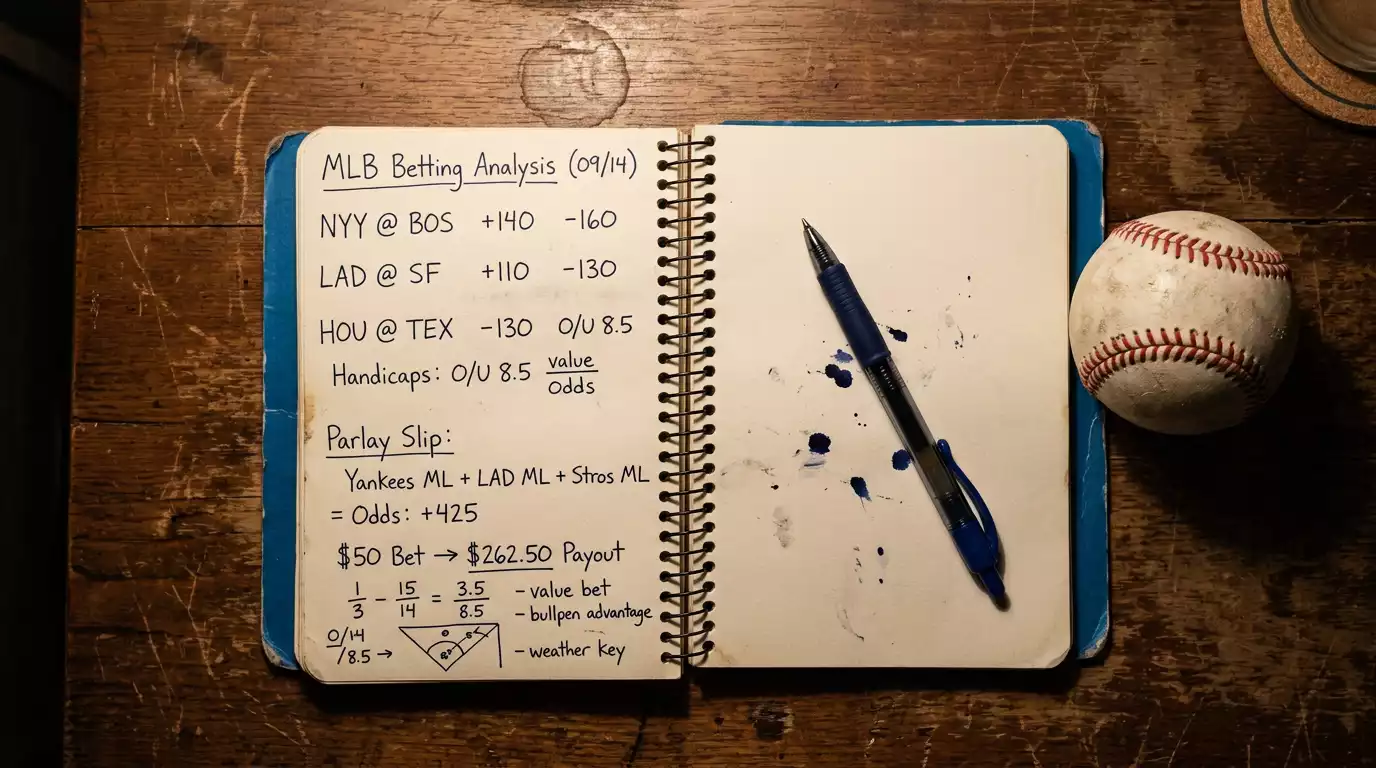
Second, the parlay ban is the more powerful of the two measures. A $200 single bet has a maximum upside in the low thousands at typical pitch-prop pricing. A $200 leg in a five-leg parlay can have a maximum upside of tens of thousands, with each leg multiplying the others. Without parlay inclusion, even a coordinated multi-pitch scheme cannot stack into the kind of payouts that would justify the operational risk. Removing parlay eligibility is the cleanest way to cap aggregate exposure on a market type without eliminating the market itself.
Third, this was a sportsbook agreement, not a federal law. Distinct American state regulators had already moved on pitch-level markets — some banning them outright, others restricting stake sizes — and the November 2025 action was the operators consolidating those positions into a uniform national posture. That distinction matters because it tells you the limit can move again. If integrity monitoring detects further attacks, the cap could be lowered, the markets could be eliminated, or the data-sharing requirements could expand. The 2025 action is the current settlement, not the final one.
What the cap did not touch is also worth saying out loud. Home run props were not capped. At-bat-level outcome props were not capped. Game-level totals, run lines, moneylines, futures — none of it was affected. The action was surgical. It targeted exactly the market category where the scandal had occurred, and left every other market structure in place. That is a meaningful sign of restraint from a league and a set of operators that could plausibly have used the moment to crack down on prop betting more broadly. They chose not to.
What changed for home run props specifically
Here is the part where I get to disappoint anyone hoping for a dramatic answer. For home run props specifically, the practical changes from the 2025 action are subtle, and most of them work in the punter’s favour rather than against.
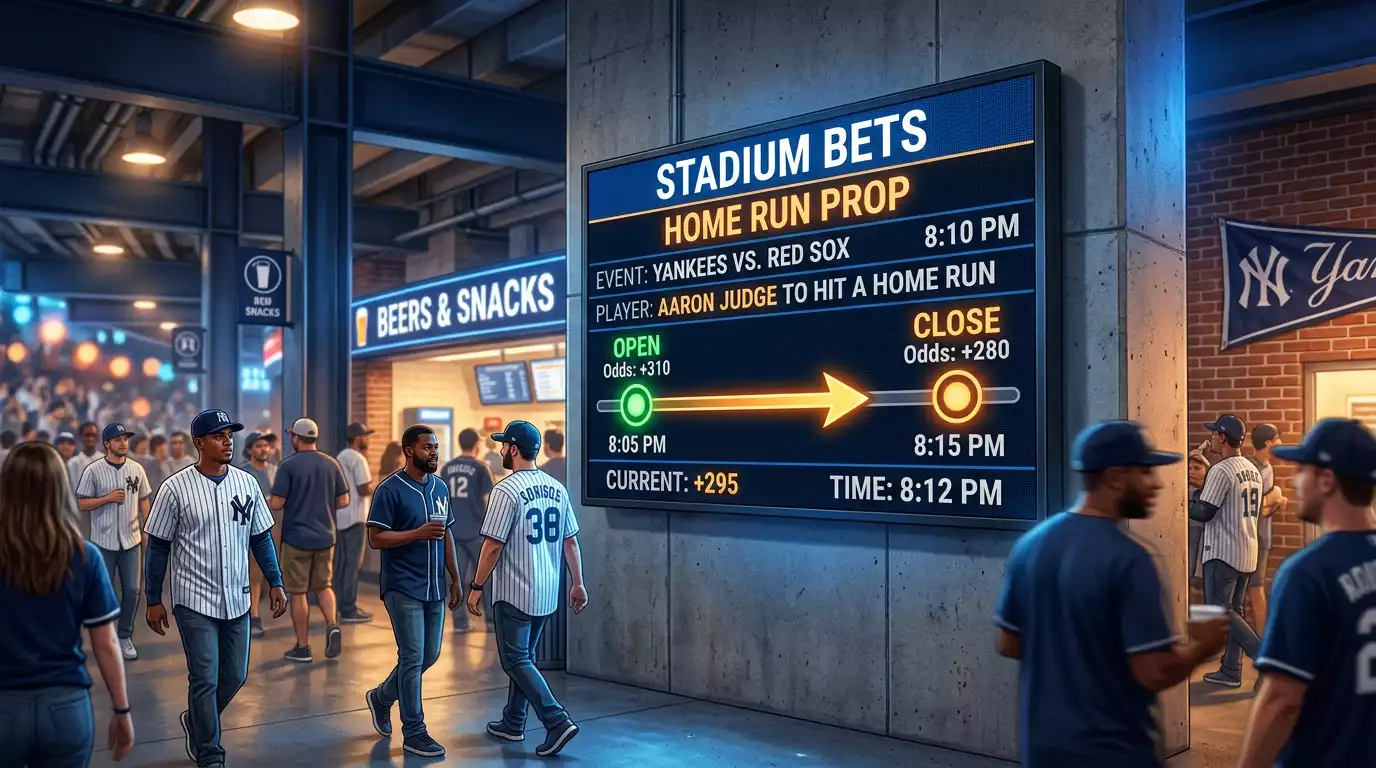
The direct change is none. Home run props were not part of the targeted market category. The cap did not touch them, the parlay ban did not touch them, the operators did not adjust their pricing or limits on home run yes/no markets in any visible way. A $200 home run prop on FanDuel or DraftKings in October 2025 looked exactly like a $200 home run prop on the same operators in December 2025. The market, the prices, the void rules — all unchanged.
The indirect changes are more interesting. The most important of them is the upgrading of integrity monitoring across all prop categories, not just the targeted ones. Operators that previously did basic anomaly detection on betting flows have invested substantially in detecting unusual patterns across player props more broadly. Home run props with unusual stake clustering or with bettor profiles that look unfamiliar are now flagged faster and reviewed more aggressively. For a normal punter, this is invisible. For anyone trying to use information advantages — even legitimate ones, like proprietary weather models or scout data — the operator response time on flagged accounts has compressed materially.
The second indirect change is that voiding rules on player props have been re-examined across the industry. The pitch-level scandal exposed how loose some operator rules were around what constituted a “qualifying” event for prop settlement. Home run props are now more uniformly settled on a strict starting-lineup basis at most major American books — meaning a pinch-hit home run does not always count where it once did. UK operator rules have not converged on this question in the same way, which is one of the small structural reasons UK home run prop pricing differs from American pricing for the same matchup.
The third indirect change is that data-sharing relationships between MLB and the sportsbooks have deepened. The Commissioner has been explicit on this point. “Once you’re in that environment where sports betting is happening, the crucial issue is access to data. That means you have to have a relationship with the sportsbooks.” Translation: the league wants to know what is being bet, by whom, in what volumes, on what specific markets. That data flow now includes home run prop markets in real time, even though home run props were not the trigger for the 2025 action. The infrastructure built to monitor pitch-level betting was always going to expand to cover everything else.
For a UK punter, the practical effect is that the home run prop you place on bet365 or Sky Bet is no longer a private transaction in any meaningful sense. The operator has detailed records, the league has aggregated visibility into market patterns, and integrity monitoring runs across the data continuously. None of this is cause for paranoia — legitimate betting is unaffected — but it is a real change in the texture of the market that punters should understand.
The integrity monitoring stack and what Manfred actually controls
Most accounts of the 2025 scandal stop at the cap and the parlay ban. The more interesting part of the story sits underneath that public action — in the integrity monitoring infrastructure that has been built up around MLB betting since legalisation, what it actually does, and where its limits sit.
Major League Baseball does not run the sportsbooks, and it cannot directly police what wagers are placed. What it has, and what the post-PASPA legalisation environment has forced it to build, is a network of data-sharing agreements with regulated sportsbooks and integrity monitoring services that together produce something like a real-time picture of betting flows across the league. Sportradar, the data partner that handles MLB’s official feeds, sits at the centre of this picture as the league’s exclusive global distributor of data for prediction markets and the operational backbone for sportsbook integrity reporting. Suspicious patterns — high-volume action on a specific player on a specific evening, unusual concentration of stakes on a particular market type, betting that appears uncorrelated with public information — get flagged through the monitoring pipeline and reviewed by integrity teams.
The Cleveland case is the cleanest demonstration of how that pipeline works in practice. The scheme did not collapse because somebody confessed or because a journalist broke the story. It collapsed because the betting patterns themselves were inconsistent with random play. Stakes clustered around specific pitches in specific at-bats in ways that pure variance does not produce. The monitoring system saw the anomaly, the integrity team investigated, and the federal investigation followed.
What the league does not have, and is unlikely ever to have, is direct power to set sportsbook policy. The Commissioner has been honest about this. “We didn’t ask to have legalised sports betting. It kind of came, and that’s the environment in which we operate.” That phrasing is not just rhetorical. It is a structural admission that the league responds to the betting market rather than designing it. The 2025 cap and parlay ban were a sportsbook agreement, in close coordination with the league, but not a league-issued mandate. The league’s leverage runs through commercial relationships, integrity data flows, and reputational risk, not through direct regulatory authority.
This matters for a UK punter for one specific reason. The integrity infrastructure I have just described is overwhelmingly American. UK-licensed sportsbooks operate under UKGC oversight, with separate monitoring infrastructure, separate data-sharing agreements, and separate criteria for what counts as suspicious. There is coordination between the two systems, but they are not the same system. The 2025 cap and parlay ban applied to American operators only. UK operators were free to maintain whatever pitch-level markets they wanted and at whatever stake sizes they wanted. Most simply do not post pitch-level markets on MLB at all, because the volume is too thin to justify the operational complexity. That is a happy accident of the British market’s marginal interest in baseball, not a regulatory design choice.
The Manfred frame is also interesting because it tells you where the league wants to go next. Repeated emphasis on monitoring, on data access, on integrity standards — these are signals that the league sees its main lever as visibility, and its main risk as gaps in that visibility. Anywhere a betting market exists without the league’s data-sharing relationships is a potential blind spot. That posture explains why MLB’s recent partnership with Polymarket — which gives the league an integrity framework over a brand-new market type — was structured the way it was, with explicit limits on what the prediction market would offer. We will get to that.
Why this matters to a British punter who could not have placed the bets anyway
Here is the question I get when I tell UK readers about the Guardians scandal: I cannot bet on FanDuel or DraftKings from my flat in Manchester, and pitch-level markets do not really exist on UK books anyway, so why should I care?
The honest answer is that the regulatory and structural changes triggered by this case will reshape MLB betting markets globally, and that includes the markets you actually do use. Three reasons in particular matter.
The first is the precedent for league intervention. Major League Baseball has now demonstrated that when a clear integrity threat materialises, it can use commercial leverage on its data partners and operator relationships to redraw market boundaries fast. That precedent does not stop at the American border. UK-licensed sportsbooks rely on the same league-supplied data feeds, the same Sportradar relationships, the same flow of pricing information that drives American markets. When the league decides certain markets should not exist, that decision propagates outward through the data infrastructure, even if the formal regulatory action is American. UK operators that previously had pitch-level markets quietly available may find them disappearing not because the UKGC ordered them to, but because the data feeds the operator depended on no longer support them.
The second is the integrity monitoring overlay. Every UK home run prop you place is now part of an integrity picture that is fundamentally tighter than it was twelve months ago. Operator anomaly detection is more aggressive, league visibility into pricing patterns is broader, and the threshold for triggering investigation is lower. None of this affects a normal punter, but it does affect anyone with a meaningful information advantage. If you have a proprietary weather model, a unique scout database, or a sharp angle on platoon splits, your stakes will be flagged faster than they would have been in 2024. That is a structural feature of the market you should plan around.
The third, and the one I find most interesting, is that the league’s response to the Guardians scandal has accelerated the move towards prediction-market alternatives. The reasoning is straightforward: prediction markets, by virtue of being structured as event contracts rather than as bookmaker liabilities, allow the league to shape integrity standards directly through partnership rather than indirectly through regulatory pressure. The MLB-Polymarket deal signed in March 2026 — a multi-year exclusive partnership reportedly valued around $300 million over three years — includes specific exclusions on individual pitches, manager decisions, and umpire performance. Exactly the categories where pitch-level scandals have lived. That is not an accident. The Guardians case is the proximate reason for the design of the Polymarket integrity framework, and the framework is now setting expectations for what an “integrity-acceptable” baseball betting market looks like across the world. If you want a fuller account of how that prediction-market shift maps onto British punter realities, my guide to MLB and Polymarket for British punters walks through the structural and access issues in detail.
I want to close with the punter’s takeaway, because the rest is context. The 2025 prop limit and parlay ban have not changed home run prop markets in any way that should alter your daily routine. They have changed the architecture you bet inside. That architecture is now more integrity-conscious, more data-rich, and more responsive to political pressure than it was when most British punters started betting MLB. The markets are still there, the prices are still beatable with discipline, the bankroll management still matters more than the picks. What has changed is that the era of casually structured prop markets — the era when an operator could throw up a pitch-level prop because retail wanted it and not think hard about the integrity exposure — is over. The market that replaces it will be tighter, narrower, and more closely watched. For a serious punter, that is not bad news. The integrity-clean market is the one that survives.
Did the November 2025 prop limit affect home run markets?
No. The $200 cap and parlay ban applied specifically to bets on individual pitches — next-pitch ball/strike, next-pitch type, and similar single-pitch outcomes. Home run props, at-bat outcomes, totals, run lines, and game-level markets were not affected. The action was deliberately surgical, targeting only the market category implicated in the Cleveland scandal.
How does MLB monitor suspicious betting patterns?
Through data-sharing agreements with regulated sportsbooks and integrity monitoring services, with Sportradar handling official MLB data feeds. The system detects anomalies in betting flows — unusual stake clustering on specific players or markets, patterns inconsistent with public information, concentrations of action that pure variance does not produce. The Cleveland scandal was uncovered through exactly this pipeline; the betting patterns flagged the scheme before any conventional investigation surfaced.
Why was pitch-level betting more vulnerable to manipulation than home run props?
Because a single pitch is a single decision by a single individual with near-perfect control of the outcome. A home run prop requires a chain of contingency — pitcher cooperation, hitter recognition, contact quality, weather, fielders, the wall — that makes coordinated manipulation economically unrewarding. Pitch-level markets collapsed that chain to a single human input, which is why they became the structural weak point and why the regulatory response targeted them specifically.
Could similar restrictions reach UK home run prop markets?
Direct regulatory action is unlikely because the UKGC has not signalled any concern with home run props specifically, and pitch-level markets are largely absent from UK operator catalogues anyway due to thin baseball volume. Indirect pressure is more plausible: if MLB and its data partners conclude that certain market types create integrity exposure globally, the data feeds and pricing flows that UK operators depend on may stop supporting those markets, leading operators to quietly remove them without any formal regulatory notice.
Prepared by the mlb Prop Bets Home Runs editorial staff.