
William Hill’s MLB Coverage: Reading the Line Sheet for HR Props
 Available in US
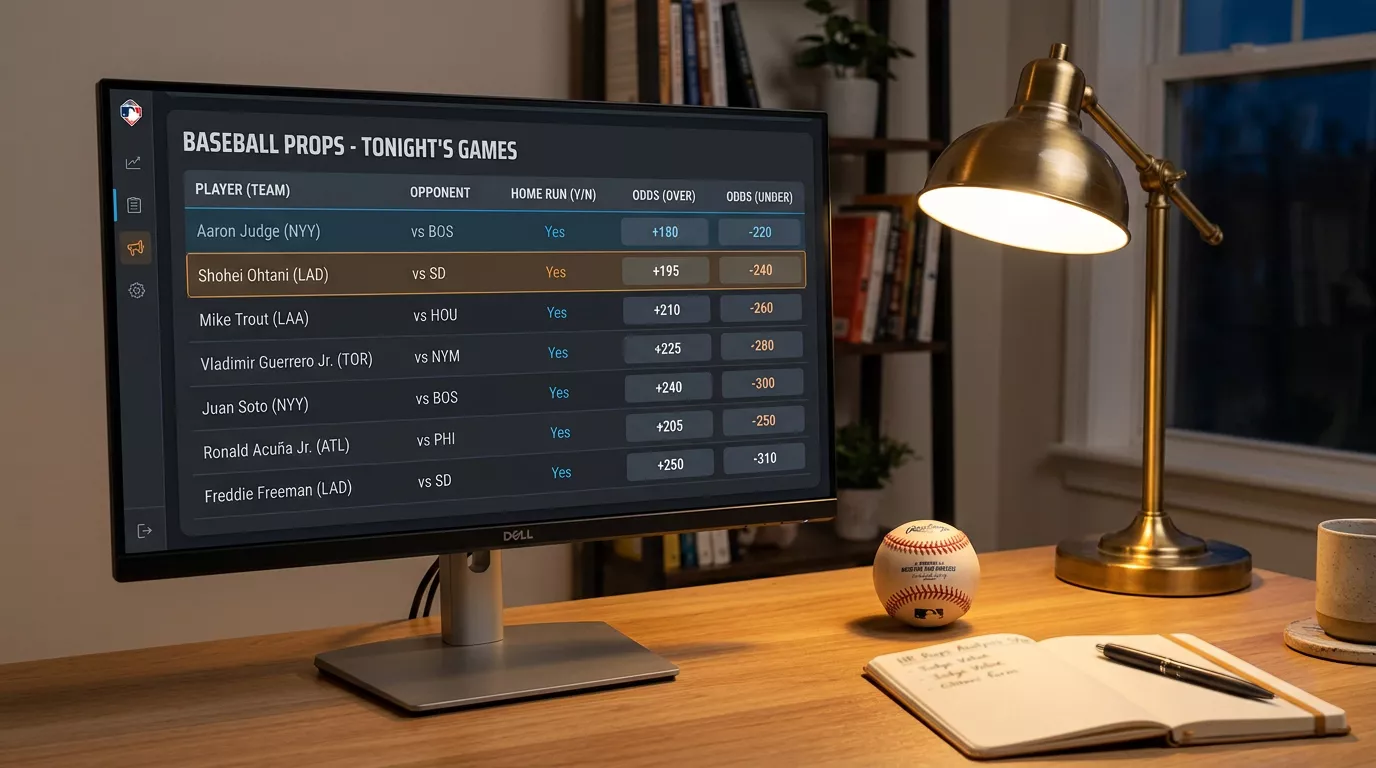
William Hill has occupied an awkward middle position in UK MLB coverage for as long as I have been tracking it. They are bigger than the small specialist books, smaller than bet365 on baseball depth, and less coherent on MLB pricing than either Sky Bet or Paddy Power. The result is a book that is not the first I would recommend for an MLB-focused punter, but is also a book that produces some of the most surprising single-game value lines in the UK market when their pricing model misfires. Reading William Hill’s line sheet correctly is a skill in itself, and it has paid off enough times in my own betting record to make the account worth keeping in active rotation. This walkthrough covers what to expect and where to focus.
The Line Sheet at First Glance
William Hill’s MLB line sheet on a typical regular-season day is moderately deep – to-hit-a-HR pricing on every announced starter on both sides, alternate 2-plus HR lines on most marquee names, total HR over/under markets on every game, and occasional first-HR-of-the-game offerings on the highest-profile matchups. The structure is similar to Sky Bet’s, with a slightly thinner alternate-line offering and slightly less consistent in-play coverage.
The line sheet posts in two waves. The standard to-hit-a-HR markets come up in late morning UK time. The alternate lines and first-HR markets come up in early afternoon. Punters who want to lock in early value on alternate lines need to wait through that gap, which is sometimes long enough that the standard market has already shifted by the time the alternates appear.
Why William Hill’s Pricing Misfires
The most distinctive feature of William Hill’s MLB pricing is its inconsistency from game to game. On any given day, two or three of their MLB HR-prop lines will be 30 to 50 cents off the consensus in either direction – a gap I rarely see on Sky Bet or Paddy Power, both of which keep their pricing within 15 to 20 cents of consensus across virtually all games. The cause appears to be a pricing model that weights certain situational inputs – recent form, opposing pitcher’s HR/9 over a short window, weather forecasts – more heavily than the consensus models do.
That heavier weighting produces lines that are sometimes badly off, and sometimes precisely right where the consensus is wrong. The book is more volatile than its competitors, in both directions. For a punter who can independently price a game and identify which side of the volatility is in their favour, William Hill’s misfires are a recurring source of edge. For a punter who relies on consensus to anchor their bets, William Hill’s lines are noisy and harder to use.
The UK Industry Context
The UK gambling industry’s GGY came in at £16.8bn for the period from April 2024 to March 2025 – a 7.3% rise on the previous year. William Hill is a substantial contributor to that figure, although its operational structure has changed considerably under recent ownership transitions. The MLB-specific operations sit within a broader sports betting platform that prioritises football, horse racing, and tennis, with baseball an afterthought.
That afterthought treatment shows up in two structural ways. First, the MLB pricing model gets less attention from senior trading staff than the football pricing model, which is part of why the lines are more volatile relative to consensus. Second, customer service for MLB-specific issues – voided bets, alternate-line settlement quirks, weather-suspension edge cases – is slower and less informed than for the major sports. Both of these are tolerances a UK MLB punter should price into their use of the account.
Looking forward, the UK sports betting market is forecast to grow to £21.3bn by 2030 with a CAGR of 11.4%, and that growth is concentrated in the major operators. William Hill’s MLB offering will likely grow with the market, but the structural treatment of baseball as a tier-two sport is unlikely to change materially.
Where I Have Found Value
The most consistent edge on William Hill’s MLB markets has been on visiting hitters at unfamiliar parks. Their pricing model appears to under-weight park factor for visitors, which produces lines on hitters travelling into hitter-friendly parks that are 20 to 30 cents long compared with consensus. Stack that with a favourable opposing-pitcher matchup and the bet often clears my fair-value threshold by enough margin to be worth a standard unit.
The corresponding fade – visiting hitters at suppressive parks like PNC or Busch – has been less reliable on William Hill, because their model appears to apply a heavier suppression on those parks than the consensus does. The lines on visiting power hitters at suppressive parks tend to be tight or even slightly short on William Hill, which is the right direction but goes a step further than the other UK books typically go.
Statcast and Modern Pricing
One question I get from UK punters new to MLB is whether William Hill incorporates Statcast metrics into its pricing. The honest answer is partially. The basic Statcast inputs – barrel rate, hard-hit rate, expected slugging – appear to feed into their model. The more sophisticated layered metrics – pitcher-specific batter handedness splits, recent launch-angle distribution, exit-velocity trends over the last 50 PAs – appear to feed in less consistently. The result is a model that captures the obvious power profiles correctly but misfires on hitters whose recent underlying metrics have shifted in ways that the basic Statcast headline numbers do not yet reflect.
For punters who track the more granular Statcast inputs themselves, that gap is a recurring source of edge on William Hill. A hitter whose hard-hit rate has spiked over the last 30 PAs but whose seasonal numbers still look modest will price too long on William Hill more often than on Sky Bet, which has a more responsive pricing engine on those situational adjustments.
The Boost Programme on MLB
William Hill’s boost activity on MLB is sparse – even sparser than Sky Bet or Paddy Power. The occasional MLB boost is usually a multi-leg parlay or accumulator with a marginal price improvement. As with the other UK books, the boost rarely converts a bad bet into a good one, and the discipline is to evaluate the underlying market on its merits before considering the boost. William Hill’s MLB customers are not the operator’s main promotional target, and the limited boost activity reflects that.
The implication is that punters should not rotate to William Hill specifically for the boosts. The reasons to use William Hill are the volatile pricing on individual games and the occasional misfire on visitors at hitter-friendly parks. The boost programme is incidental.
In-Play Coverage
William Hill’s in-play HR-prop offering is comparable to Sky Bet’s – to-hit-a-HR markets refresh once per inning on most games, alternate lines are unavailable in-play, first-HR markets are not offered after the first inning. The depth is below Paddy Power’s and substantially below bet365’s. For in-play-focused MLB punting, William Hill is not the right book.
The pre-game window is where William Hill’s coverage is most useful. The two-wave posting structure – standard markets first, alternates later – gives a window in early afternoon UK time when the alternate lines come up but consensus has not yet fully digested the morning’s news. That window has produced a meaningful share of my profitable bets on William Hill across the last several seasons.
Account Considerations
The account-restriction picture on William Hill is similar to other major UK operators. Sustained focus on lower-margin markets – alternate lines, visiting-team HR props, first-HR markets – eventually attracts limits, although anecdotally William Hill seems slower to limit than Sky Bet. The volatile pricing means that a punter taking advantage of misfired lines stands out less to the trading desk than a punter consistently beating consensus prices on the well-priced markets, which may be why the limits feel slower in practice.
That said, the account is not indefinite. UK MLB punting requires a multi-book rotation regardless of how friendly any single book seems in any given month. The cleanest progression in account management is something like how UK boost tokens work and when they actually add value to home run props, where the broader structural patterns of UK promotional activity become useful context for managing exposure.
The Practical Verdict
William Hill is not the first UK book I would recommend to a new MLB punter, and it is not the book I would recommend as a primary account. It is the book I would recommend to keep in the rotation for the recurring misfires on visitor pricing, the occasional sharp reads on situational shifts that the other books miss, and the volatile pricing more generally. For a punter willing to do their own pricing work, William Hill produces enough single-game value lines to justify its place in the rotation.
For a punter who does not do their own pricing work and relies on consensus, William Hill’s volatile pricing is more likely to hurt than help. In that case, a Sky Bet and Paddy Power rotation with bet365 as the third option is probably the right configuration without William Hill in the mix.
Reading the Sheet, Reading the Book
The broader takeaway from the William Hill analysis is that no single UK book is uniformly sharp or uniformly soft on MLB. Each operator has its specific structural patterns – its model’s weighting choices, its operational priorities, its trading-desk focus – and those patterns produce lines that are exploitable in some directions and dangerous in others. Reading the line sheet correctly means reading the book correctly, and that takes time across multiple seasons of active use. William Hill rewards that time more than most, in my experience.
Does William Hill offer Statcast-driven props?
Partially. The basic Statcast inputs – barrel rate, hard-hit rate, expected slugging – appear to feed into the pricing model. The more granular layered metrics like pitcher-specific batter splits and short-window launch-angle trends are incorporated less consistently. The result is a model that captures the obvious power profiles but misfires on hitters whose recent underlying numbers have shifted in ways the seasonal headline figures do not yet reflect.
Is William Hill a good first UK book for MLB punting?
Not really. The volatile pricing creates value on individual lines but is harder for new MLB punters to read accurately. Bet365 or Paddy Power are better starting points. William Hill is more useful as a third or fourth account in a rotation, where its occasional misfires can be exploited without depending on consistent pricing across the line sheet.
When are William Hill’s MLB lines most exploitable?
The alternate lines posted in early afternoon UK time, particularly on visiting hitters at hitter-friendly parks, are the most consistent source of edge. The standard to-hit-a-HR markets are also more volatile than competitors, producing both juicy long lines and dangerous short ones. A punter with their own pricing process can identify the directions that favour them; a punter relying on consensus will get burned by the same volatility that creates the value.
Published by the mlb Prop Bets Home Runs team.