UK Account Restrictions for MLB Bettors: What 4.3% of Punters Already Know
 Available in US

The UK account restriction conversation has finally moved out of niche gambling forums and into mainstream regulatory attention. The numbers behind it are stark, the operator behaviour is deeply embedded in industry economics, and MLB punters specifically have been hit harder than the average UK customer because baseball pricing margins are tighter than football and the books treat sustained MLB activity as a sharp-bettor signal. After years of receiving the limit emails myself across multiple operators, and after reading the recent UKGC research closely, I have a clearer view of how restrictions work, what triggers them, and what UK MLB punters can realistically do about them. This is the practical breakdown.
The Numbers Behind the Practice
The headline figure is the one most UK punters have not yet seen. UKGC research from 2025 found that 4.3% of UK betting accounts had encountered restrictions, and 51.69% of restricted accounts were closed for “commercial reasons”. That second figure is the more revealing one. Of all UK accounts that get restricted, more than half are closed not because of suspected fraud, money laundering, or problem gambling – but because the operator decided the customer was not commercially desirable to retain.
That commercial reasoning is rarely stated explicitly to the customer. The standard restriction email cites “trading reasons” or “internal review” or vague references to terms and conditions. The actual decision is straightforward: the customer’s pattern of betting suggests an above-average likelihood of long-run profit, and the operator’s economics are better served by limiting or closing the account than by continuing to take the bets.
Why MLB Bettors Get Hit Harder
The structural reason MLB bettors face restrictions faster than football bettors is margin. UK football markets – particularly Premier League match outcomes, goalscorer markets, and corners – operate at margins of 4 to 6%. UK MLB markets, particularly HR props and alternate lines, operate at margins of 6 to 9%. That sounds counter-intuitive: a higher margin should mean the book has more room to absorb sharp action without limiting the customer.
The reality is the opposite. Higher margins on niche markets mean the operator is more sensitive to sharp action because the niche markets get less total volume to dilute the sharp money. A consistent MLB-focused punter with even modest staking represents a larger relative share of the operator’s exposure on any given HR-prop market than a football punter would on a Premier League goalscorer market with thousands of customers offsetting each other.
The result is that an MLB-focused UK punter can produce limit-triggering signals to the operator with a much smaller volume of bets than a football-focused punter would need to produce the same signal. Two months of consistent MLB activity at standard stakes is often enough.
What Industry Insiders Say About It
Industry voices have been increasingly direct about the practice. UKGC chief executive Andrew Rhodes has said publicly that “if this is a feature of an operator’s business model, customers should be aware of it”, in reference to operators’ restriction policies as part of their core commercial approach.
The acknowledgement from the regulator that restrictions are a feature of operator business models – not a defensive response to specific customer behaviour – is significant. It establishes the regulatory understanding that the practice is structural and intentional, not exceptional. From the punter’s perspective, that means restrictions should be expected, planned for, and managed as a known cost of UK MLB punting.
The customer experience is described in equally direct terms by people working in the industry. Industry consultant Paul Sculpher of GRS Recruitment has noted that “even I, with betting prowess essentially limited to player props on the New England Patriots NFL team, plus tips from friends, have lost the ability to use my accounts with a number of the main operators”. The punters who get restricted are not all sharp arbitrage operators; they are casual players whose individual bet patterns happen to trip the operator’s commercial filters.
The Triggers I Have Identified
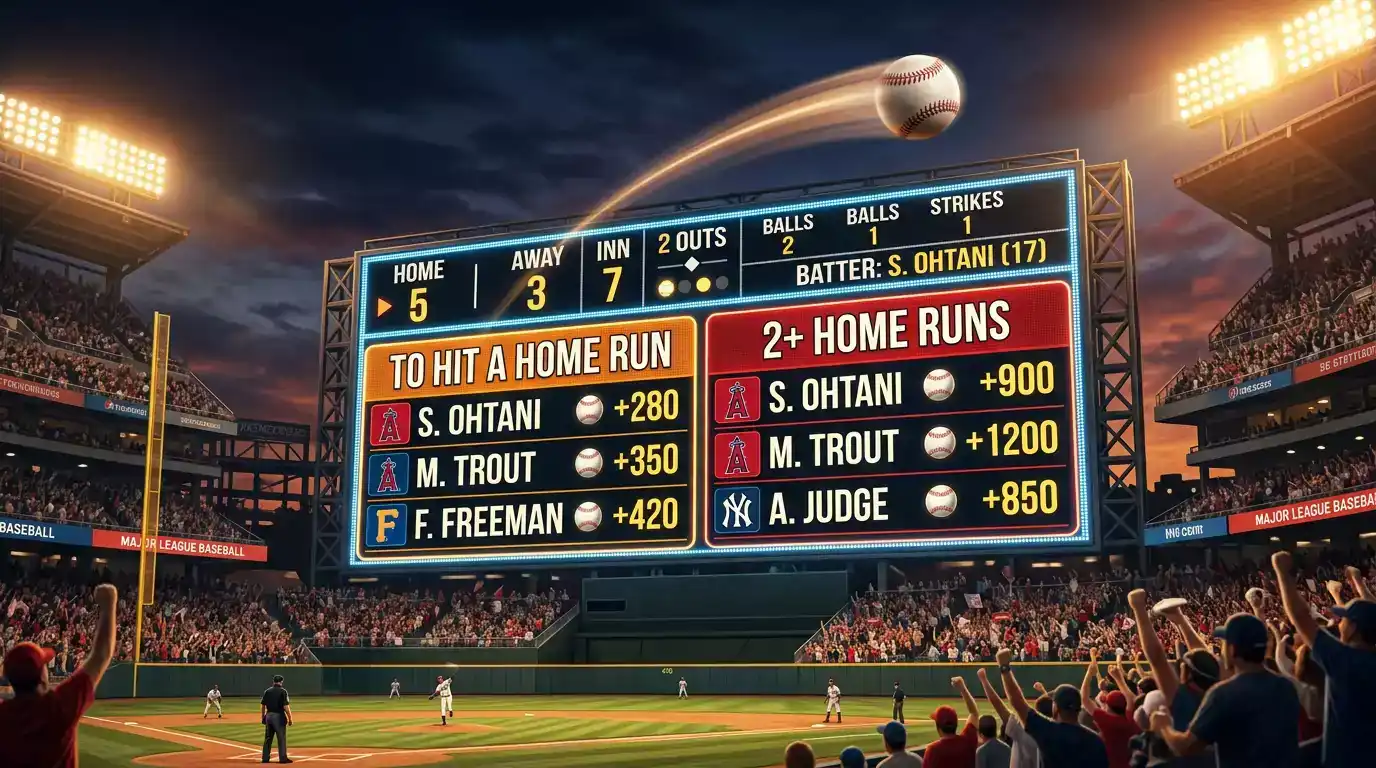
Across my own multi-account history and conversations with other UK MLB punters, the most common trigger for early restriction has been alternate-line activity on HR props. The standard to-hit-a-HR market generates volume from casual punters and offers the operator the dilution they need; the alternate 2-plus and 3-plus lines do not. A punter who consistently bets the alternate lines is taking positions that the operator cannot easily offset against the rest of their book, and the limit comes faster.
The second most common trigger has been bets on visiting hitters at unfamiliar parks. The pricing on these is more model-driven and more vulnerable to identification. A punter who consistently backs visiting power hitters at hitter-friendly parks – or fades visiting hitters at suppressive parks – is reading the park-factor data the operator’s model under-weights, and the trading desk eventually notices.
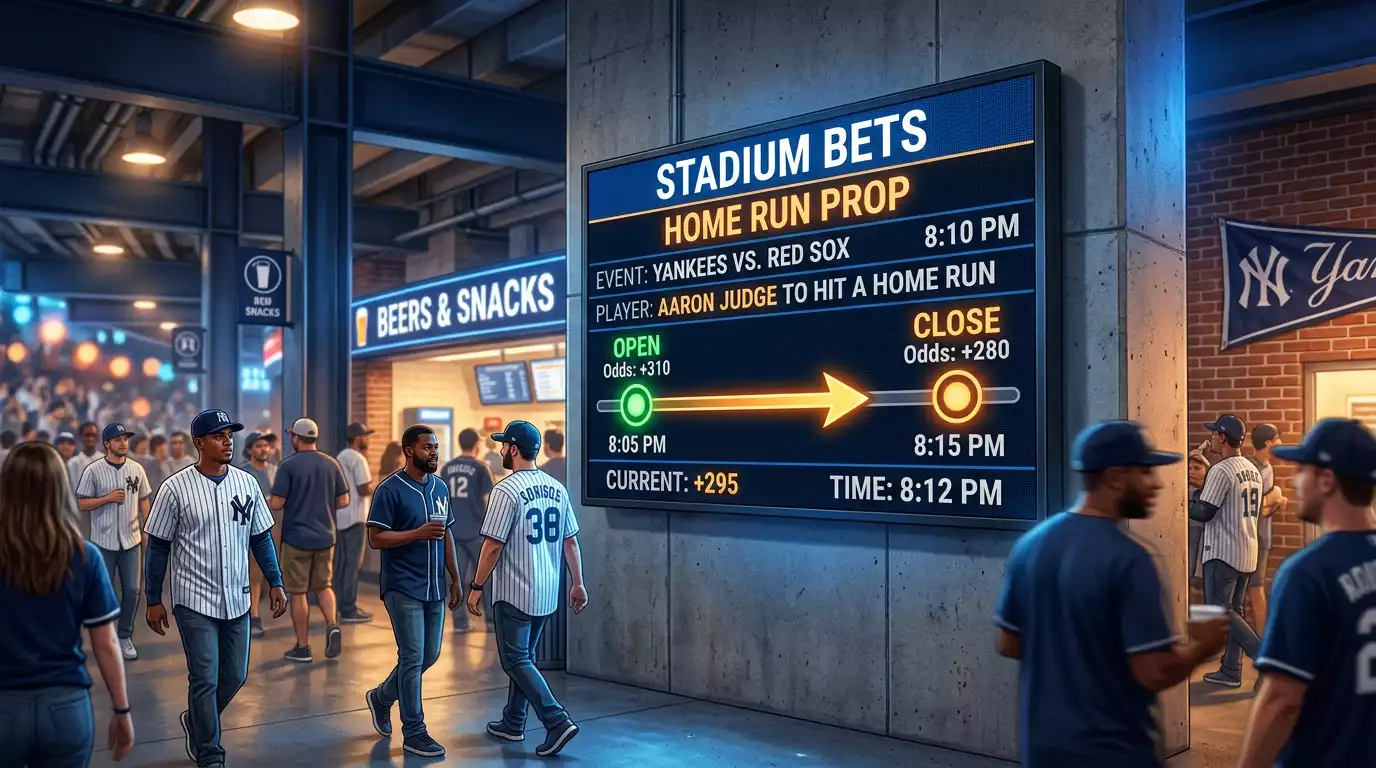
The third trigger is volume on smaller-market matchups. The operator’s pricing on a Pirates-Royals game is less robust than on a Yankees-Red Sox game. A punter who concentrates volume on the smaller-market games is exploiting that pricing weakness, and the cumulative pattern shows up in the trading-desk reports faster than equivalent volume on marquee games would.
Industry Economics Behind the Practice
The structural reason restrictions persist is the concentration of operator profit in a narrow slice of the customer base. The House of Lords Gambling Industry Committee found that 60% of UK gambling industry profit comes from 5% of customers – problem gamblers or customers in the at-risk category. That concentration shapes the operator’s view of every customer.
If the bottom 95% of customers – the casual recreational punters – are jointly profitable to the operator only at a modest level, the operator’s economics depend on retaining and protecting the high-value 5%. Within that high-value 5%, the operator wants the customers who are losing money predictably; the customers who are winning money predictably represent direct cost. The restriction system identifies and removes the latter group.
That is uncomfortable to read because it makes clear that operator economics are not aligned with serving punters who are good at gambling. They are aligned with serving punters who are bad at gambling. The restriction system is the mechanism by which that alignment is enforced.
What UK MLB Punters Can Realistically Do
The honest answer is: not much, individually, but several things in aggregate. The discipline of multi-book rotation is the first thing. Spreading activity across four to six accounts means the per-account volume stays below the typical restriction threshold for longer. The discipline of not concentrating on the most-targeted markets – alternate HR lines on smaller-market games, visiting hitters at hitter-friendly parks – extends account longevity, even though those are exactly the markets where the most edge sits.
The second thing is to expect rotation. Every UK account will eventually be restricted for an MLB-focused punter. The realistic operational frame is that an account is a renewable resource – usable for some period of months or a year or two, depending on patterns and operator – and replacement accounts need to be set up before the existing ones are exhausted, not after.
The third thing is to read the regulatory environment. The April 2026 RGD hike and subsequent regulatory pressure will push operators toward tighter margins, which may shift restriction patterns in either direction depending on how the operators respond. How affordability checks and UKGC rules hit casual MLB punters covers an adjacent dimension of the regulatory pressure that affects all UK MLB bettors regardless of staking level.
The Long-Term Trajectory
The UK regulatory environment is moving slowly but consistently toward making restriction practices more transparent. The UKGC has commissioned research on the topic, the House of Lords has held hearings, and consumer-protection bodies are paying more attention than they did five years ago. The likely outcome over the next several years is not the elimination of restrictions but the requirement that operators disclose them more clearly and apply them with more consistent standards.
For MLB punters specifically, that trajectory probably means restrictions become more predictable but not less common. The operators have strong commercial incentives to continue the practice, and the regulatory framework is unlikely to remove those incentives directly. The improvements will be at the margins – clearer notification, more consistent application – rather than at the structural level.
The Account as a Renewable Resource
The reframe that has helped me most is treating each UK account as a renewable resource with a finite useful life rather than as a permanent betting venue. That framing aligns the punter’s expectations with the operational reality and removes the surprise and frustration that comes from expecting a different outcome. The account works for some period; then it does not; then a new account is set up.
UK MLB punters who internalise that framing tend to find the experience of getting restricted less personally stressful and more straightforwardly tactical. The restrictions are not a verdict on the punter; they are a feature of the system. Reading them as such, planning around them, and continuing to extract value from the windows when accounts are usable is the operational reality of the activity in 2026.
Why do UK books restrict MLB bettors faster than football?
MLB markets – particularly HR props and alternate lines – operate at higher margins but lower total volume than football markets. The lower volume means individual sharp punters represent a larger relative share of the book’s exposure, which produces clearer trading-desk signals at smaller bet sizes than football would. The result is that MLB-focused punters trip the commercial filters faster, often within two to three months of consistent activity.
Can a UK punter avoid account restrictions entirely?
No, not for sustained MLB activity. The structural commercial logic affects every operator. The realistic approach is to extend account longevity through multi-book rotation and avoiding the most-targeted markets, but every individual account will eventually be restricted. Treating accounts as renewable resources with finite useful lives is more practical than expecting any single account to remain unrestricted indefinitely.
Are restriction notifications transparent?
Generally not. The standard restriction email cites vague references to trading reasons, internal review, or terms and conditions. The actual basis is usually commercial – the operator has decided the account is not desirable to retain – but the operator rarely states this explicitly. Regulatory pressure is slowly improving notification clarity, but the trajectory is toward more transparent disclosure rather than the elimination of the underlying practice.
Written by the editors at mlb Prop Bets Home Runs.