Shohei Ohtani’s Two-Way Premium: How Bookmakers Price the Unicorn
 Available in US
Pricing Ohtani is the closest thing in the modern HR-prop market to pricing an asset class with no comparables. There is no comparison player to anchor the line. There is no historical sample of two-way performers – Babe Ruth’s two-way years are too old to mean much, and they did not include the daily DH workload Ohtani has added – and there is no clean way to model the interaction between his pitching workload and his batting performance. Bookmakers have been figuring this out in real time for several seasons now, and they are getting better at it. They are also still wrong, in specific and bettable ways. This is the article I would have wanted in 2023 when I was first trying to systematise my Ohtani prop bets.
The 2025 Numbers That Set the Baseline
Two figures define what the market has had to absorb. Shohei Ohtani in 2025 broke his own franchise record with 55 home runs and posted a 58.4% hard-hit rate – second in MLB only to Schwarber’s 59.6%. The HR total alone makes him a top-tier slugger by any measure. The hard-hit rate confirms it is not a fluke of park or ball; the underlying contact quality matches the output. He is a genuine 50-plus HR talent in a typical season, with park context, lineup support, and DH workload all working in his favour.
The other half of the story is what makes the pricing problem unique. Ohtani in 2025 became the first player in history to record 50-plus home runs and 50-plus pitcher strikeouts in the same season. That is not a stat that gets thrown around for fun. It changes the structure of the player from a market perspective. He is not a hitter with occasional pitching duties; he is a hitter and a pitcher concurrently, and the workload of one half of his game directly affects the workload available for the other.
Where the Pricing Models Struggle
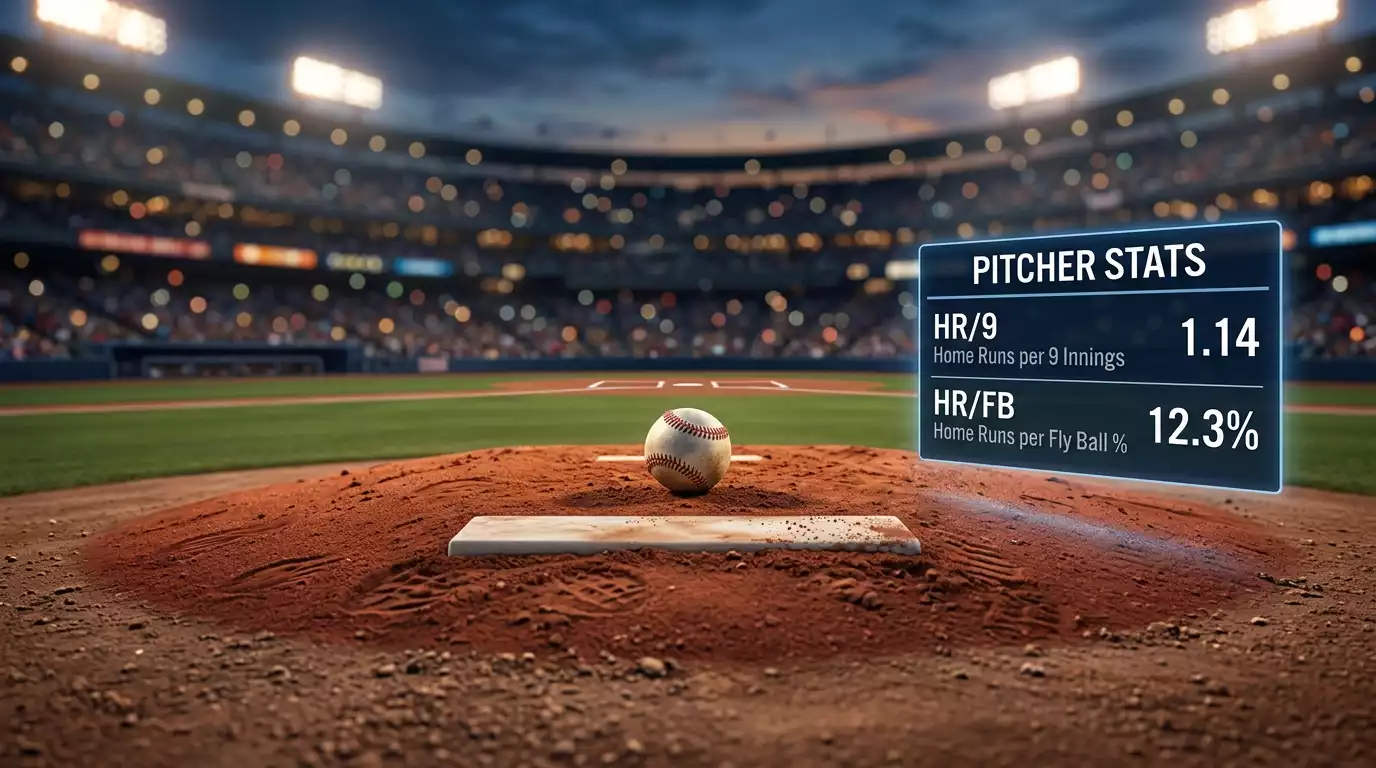
Most HR-prop pricing models rest on a few stable inputs: the hitter’s per-PA HR rate, the opposing pitcher’s HR/9, the park, the weather, and lineup-slot expected PAs. For 99% of players, those inputs are stable across the season and the model produces reasonable lines.
For Ohtani, two of those inputs become unstable. First, the per-PA HR rate fluctuates with his pitching workload. On days he pitches, his at-bats come in a different rhythm – typically less protected in the lineup, sometimes with him pulled early for relief, sometimes with the pitch count limiting his focus on contact. On days he does not pitch, he is the standard high-end DH bat. The market often prices his HR prop the same on both kinds of days, which is wrong. There is a real edge in fading Ohtani HR props on his pitching starts, and a small but real edge in backing them on the days after he pitches when he gets full rest.
Second, his expected PAs fluctuate. On the days he pitches, the lineup may be configured to keep him in for the maximum possible turns through the order, or to swap him out for a better defensive option once he is out of the pitching role. The variance on his per-game PA count is meaningfully higher than on a typical full-time hitter, and that variance is not always reflected in the to-hit-a-HR market price.
The Pitching-Day Discount
This is the cleanest edge I have found on Ohtani in the past two seasons. On the days he is the announced starting pitcher, his to-hit-a-HR price often comes in at a level only a tick wider than his standard non-pitching-day price. The actual fair value on those days, by my reckoning, is substantially wider – maybe 30 to 50 cents on the moneyline. The reason is twofold: he typically gets fewer plate appearances when he is pitching late into the game, and his per-PA HR rate on pitching days is measurably lower than on hitting-only days because the focus is split.
I do not bet against Ohtani frequently. He is a top-five power hitter on the planet and the variance on outright HR-prop bets is brutal. But the days he is the starting pitcher are the days I will fade his HR prop when the price fails to widen appropriately. Across a season’s worth of his pitching starts, that fade has been mildly profitable in the bets I have tracked, and it has the rare property of being a position the public is structurally reluctant to take.
The Recovery-Day Bonus
The flip side of the pitching-day discount is the recovery-day bonus. When Ohtani has a routine pitching start three days before a hitting-only game, the public market often prices that hitting-only day exactly at his average. The fair value, in my view, is slightly shorter – maybe 20 to 30 cents on the moneyline – because he is well-rested, focused on hitting, and the lineup is built around getting him maximum PAs.
I would not stake heavily on this read because the effect is small and the variance on a single-game HR prop is enormous. But over a season, including these recovery-day bumps in my Ohtani screen has resulted in slightly better selection on the days I do back him.
Park Context for the Dodger Bat
Ohtani’s home park amplifies his power profile beyond what his already elite skill would produce on its own. Dodger Stadium is the most hitter-friendly venue in 2026, with a leaguewide HR park factor that puts it ahead of most parks people would intuitively rank higher. That park context is partially priced into his home-game HR markets but, again, not always fully – the market often shades his home price five to ten cents shorter when it should be shading 15 to 20 cents shorter, because the public reads “Ohtani at home” as a default chalk position rather than a structural overlay of two amplifiers stacked on each other.
The compound of “elite hitter” and “extreme hitter park” is what makes his home HR-prop markets the cleanest baseline for backing Ohtani at all. On the road his price compresses to fair value or even slightly short – every public bettor backs Ohtani, and the books shade accordingly – but at home the structural amplification is consistently undershaded.
What Two-Way Players Mean for the Position-Broader Market
Ohtani is currently the only true two-way player in MLB, but the pricing lessons from his market apply more broadly to any player whose role makes the standard pricing model unstable – DH-only specialists, super-utility players who shift positions across a homestand, or hitters who pitch occasionally as a quirk. The general principle is that whenever a player’s role introduces variance into PA volume or per-PA HR probability, the market tends to under-shade in the direction of average – pricing close to the player’s overall season average rather than to the day-specific expected value.
That under-shading is the structural inefficiency. It is most obvious on Ohtani because his role is so unusual, but it shows up on a smaller scale across the league. I think about this as part of a broader theme of role-driven pricing edges – the same pattern that runs through 30/30 candidates, where the dual skillset creates similar pricing complications. How seven 30/30 hitters in 2025 reshaped HR prop diversification covers that adjacent angle in detail and is worth pairing with the Ohtani read.
Practical Rules I Use
My Ohtani screen has settled into something like the following over the past two seasons. I default to backing his to-hit-a-HR market on home games where he is not pitching and not in the immediate aftermath of a pitching start. I default to fading his to-hit-a-HR market on home games where he is the announced starting pitcher, when the price fails to widen by at least 25 to 30 cents. I am neutral on him on the road, with a slight lean toward backing on recovery days from a pitching start. I avoid 2-plus HR alternate lines on him entirely on pitching days, where the variance compounds. And I am wary of any parlay that includes Ohtani as an HR leg unless I have specifically checked which kind of day he is having.
Those rules are not glamorous and they are not going to win me a season. But they have been profitable in modest size against a market that, more than for any other player, struggles to keep up with the structural complexity of what he is doing on the field.
The Pricing Will Keep Improving
The thing I am most confident of is that the Ohtani-specific edges will narrow over the next two seasons. The pricing engines are getting smarter; the data is getting more granular; the public is getting more aware of the pitching-day variance. By 2027 I expect the pitching-day discount to be closer to fairly priced. For now, in 2026, the structural inefficiencies are still there in measurable size, and that is the season I am betting against.
Does Ohtani’s pitching workload affect his HR props?
Yes, measurably. On days he is the announced starting pitcher, his to-hit-a-HR price often comes in only a tick wider than his standard hitting-only price, when the fair widening should be 30 to 50 cents on the moneyline. He typically gets fewer plate appearances on pitching days, and his per-PA HR rate is also lower because the focus is split.
Where is the cleanest edge to bet Ohtani’s HR market?
Home games where he is not pitching and not in the immediate aftermath of a pitching start. Dodger Stadium amplifies his already elite power profile, and the market consistently under-shades that compound effect by 5 to 10 cents on the moneyline. The combination of an elite hitter at the most hitter-friendly park is rarely priced as short as it should be.
Should I bet Ohtani on the road?
Neutral, with a slight lean toward backing on recovery days from a recent pitching start. The road market prices him close to fair value because the public consistently backs him; the structural park amplification that shows up at home is absent. The recovery-day read is the only consistent road edge worth playing.
Written by the editors at mlb Prop Bets Home Runs.