Alternate Home Run Lines: How 2+ Home Runs Markets Actually Work
 Available in US
Table of Contents
- What Counts as an Alternate Line, and Why Operators Offer Them
- The Poisson Trap: Why 2+ Is Not Twice as Hard as 1+
- When the 2+ Line Becomes Genuinely Live
- How I Stake an Alternate Line Without Going Broke
- Where the Real Edge Lives on This Market
- The One Question Every Punter Should Ask Before Tapping the Slip
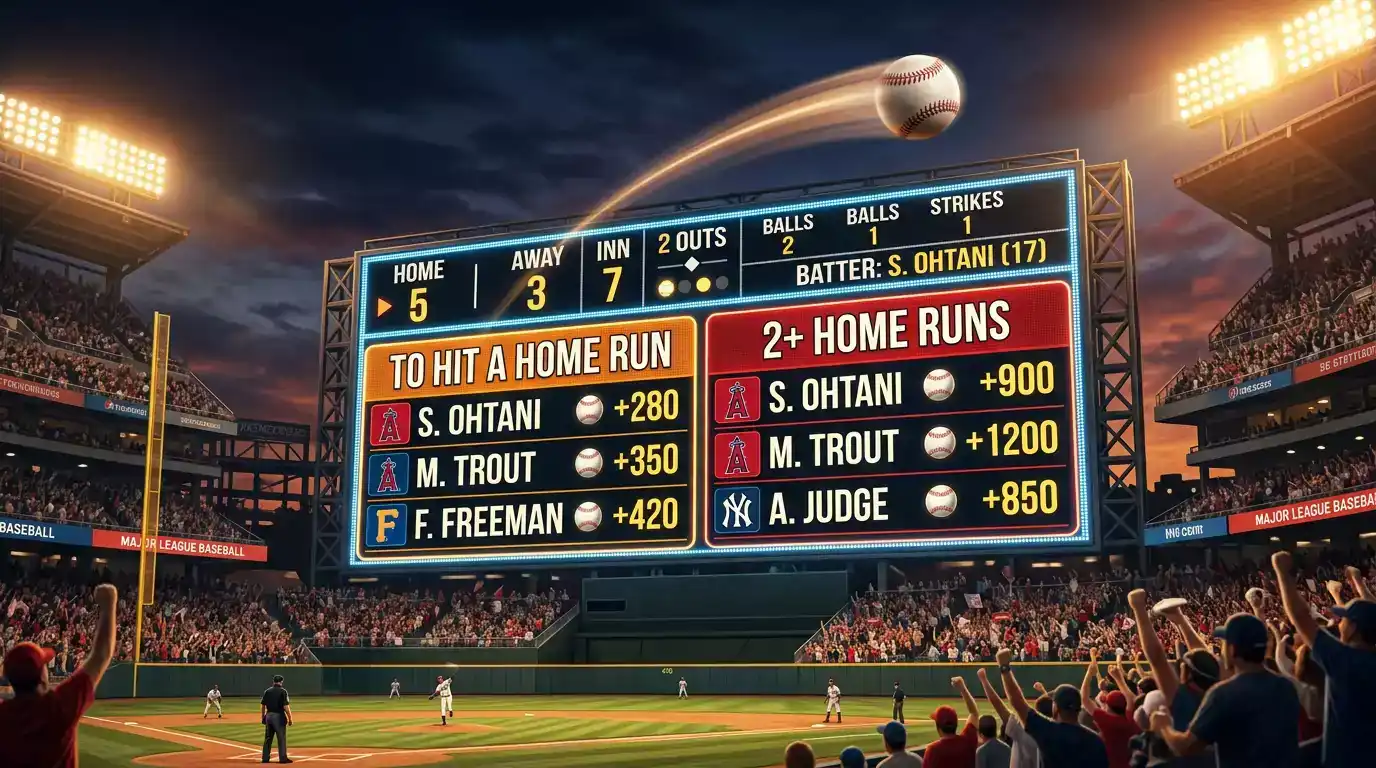
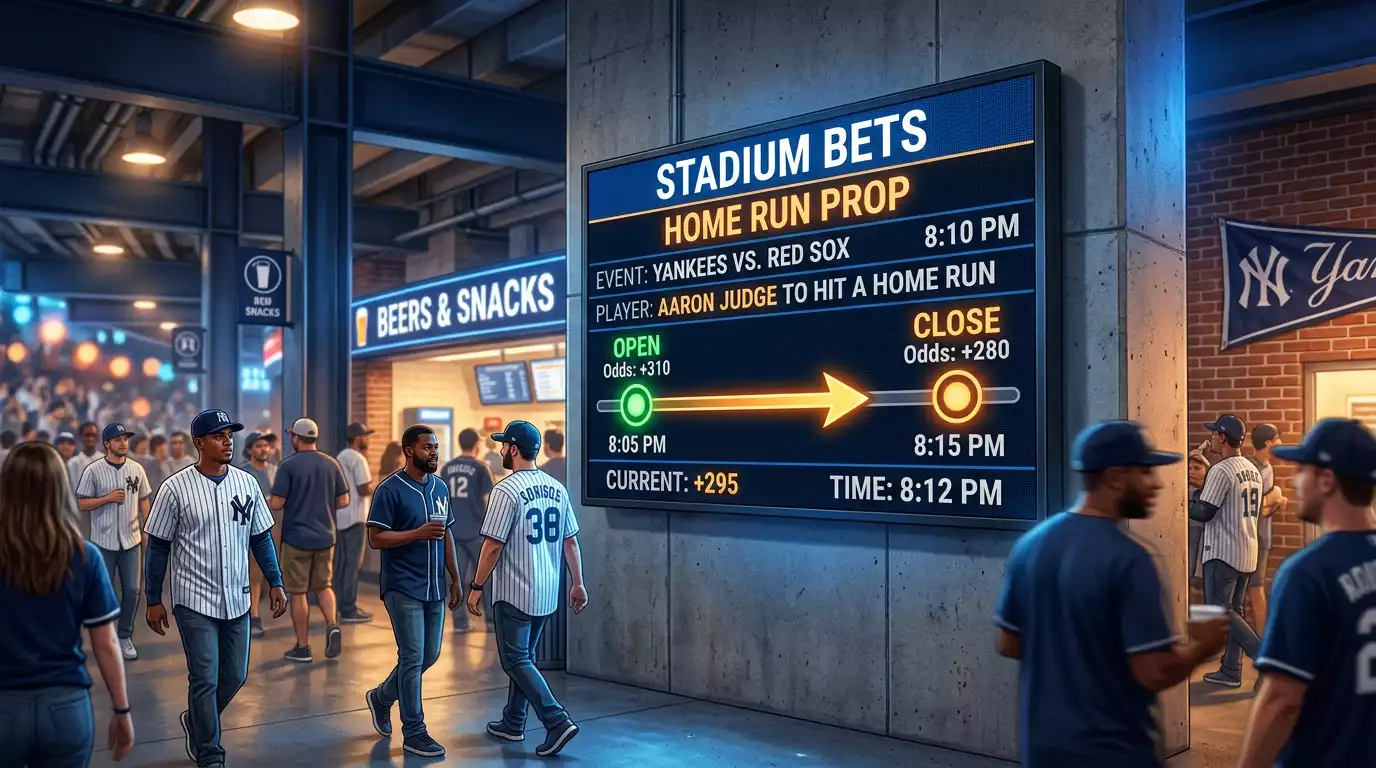
The first time I clicked on a “2+ home runs” market was in May 2018, on a Friday night Yankees game. I had a strong opinion on Aaron Judge against a soft right-hander, the standard “to hit a home run” was sitting at +260, and the 2+ line was offering +1400. I bet a fiver, Judge went deep twice, and I learned the most expensive lesson of my early prop career: I had no clue why those numbers existed in the relationship they did. I just thought they looked good. That single ticket cashed and ruined me for about six months, because I chased the same shape on every slate without understanding that the line and the price are answering completely different questions.
Eleven years later, I still see UK punters making the same mistake. Alternate home run lines are not just bigger versions of the standard prop. They are a different bet on a different distribution, and the people who treat them as a longshot lottery are funding the people who treat them as a Poisson problem. This is the article I wish someone had handed me back then.
What Counts as an Alternate Line, and Why Operators Offer Them
Imagine you walk into a chip shop and the menu only sells one size of chips. That is the “to hit a home run” market – a binary, yes or no, did the player go deep at least once. Now imagine the chip shop adds small, regular, large, and a comically oversized portion at twice the price. That is what alternates do. The operator keeps the underlying calculation but slices the same probability cone into multiple discrete buckets, each with its own price.
The two most common alternate flavours you will see on UK-facing books are “to hit 2 or more home runs” and “to hit 3 or more home runs”. A few books also publish “exactly 1” and “exactly 2”, though those are rarer because the volume is thin. The 2+ market is the workhorse – it sits in roughly 80% of the slates I review for top sluggers and is where most of the recreational handle goes.
Why do operators bother with all this? Because alternate lines are a margin engine. A standard home run prop on a +260 favourite carries an implied probability of around 27.8%, and the book books a hold of three to five percent across the binary market. On a 2+ line at +1400, the implied probability is 6.7%, and the hold percentage on long-tail outcomes can creep up toward eight or even ten. That extra juice is the fee you pay for the variance. Home run props in general are quoted from around +200 (about 2.90 in decimal) and stretch out from there, which is why they are one of the most popular MLB prop categories in the first place. Bigger numbers, fatter margins, happier traders.
The Poisson Trap: Why 2+ Is Not Twice as Hard as 1+
Here is the question that separates sharp punters from square ones: if a player is +260 to hit one home run, what is a fair price for two? Most punters guess somewhere around +500 or +600, doubling the difficulty. The actual answer, mathematically, is somewhere between +1100 and +1500 – and the reason is that home runs are roughly Poisson-distributed, not binary.
A Poisson distribution describes the count of rare independent events in a fixed window. For a slugger with three or four plate appearances per game and a per-PA home run rate of around 6%, the expected number of home runs in a game is somewhere near 0.24. Plug that into a Poisson curve and the probability of exactly one home run is far higher than the probability of exactly two, and exactly two is roughly six to seven times rarer than exactly one. That ratio is what creates the +260 to +1400 jump you see on the line sheet.
The trap is that a punter looking at +1400 sees “five times the price of the standard line, must be five times as hard”. It is closer to seven times as hard. So if the standard is fairly priced at the implied 27.8%, the 2+ at +1400 is implied at 6.7% but should sit nearer 4%. That gap is the operator’s edge plus a chunk of public square money.
Cal Raleigh’s 2025 season is a useful sanity check on the upper bound. He ran out 60 home runs in 152 starts – a per-game rate of 0.39. Even at that historically absurd pace, the Poisson probability of two in a single game sits around 6.6%. Aaron Judge in his 62-HR season ran around 6.2%. So when I see +1400 priced on a hitter who is not currently rampaging like Raleigh in 2025 or Judge in 2022, I treat it as a bin of last resort and a clear signal that the book wants the action.
When the 2+ Line Becomes Genuinely Live
I have a checklist taped to the side of my monitor for situations where I will actually consider a 2+ ticket, and it has four boxes. All four need to be ticked, because even one missing condition collapses the maths.
The first box is venue. Dodger Stadium leads MLB in 2024 to 2026 with a home run park factor of 129, which simply means it produces 29% more home runs than the league average. Great American Ball Park sits second at 122. If the game is at Coors, Dodger, GABP, Yankee Stadium, or a few others on the warm-bandbox tier, the 2+ probability shifts measurably upward. If the game is at PNC Park, where I will explain elsewhere why unders on home run props are basically a sleeper market, you bin the ticket without further thought.
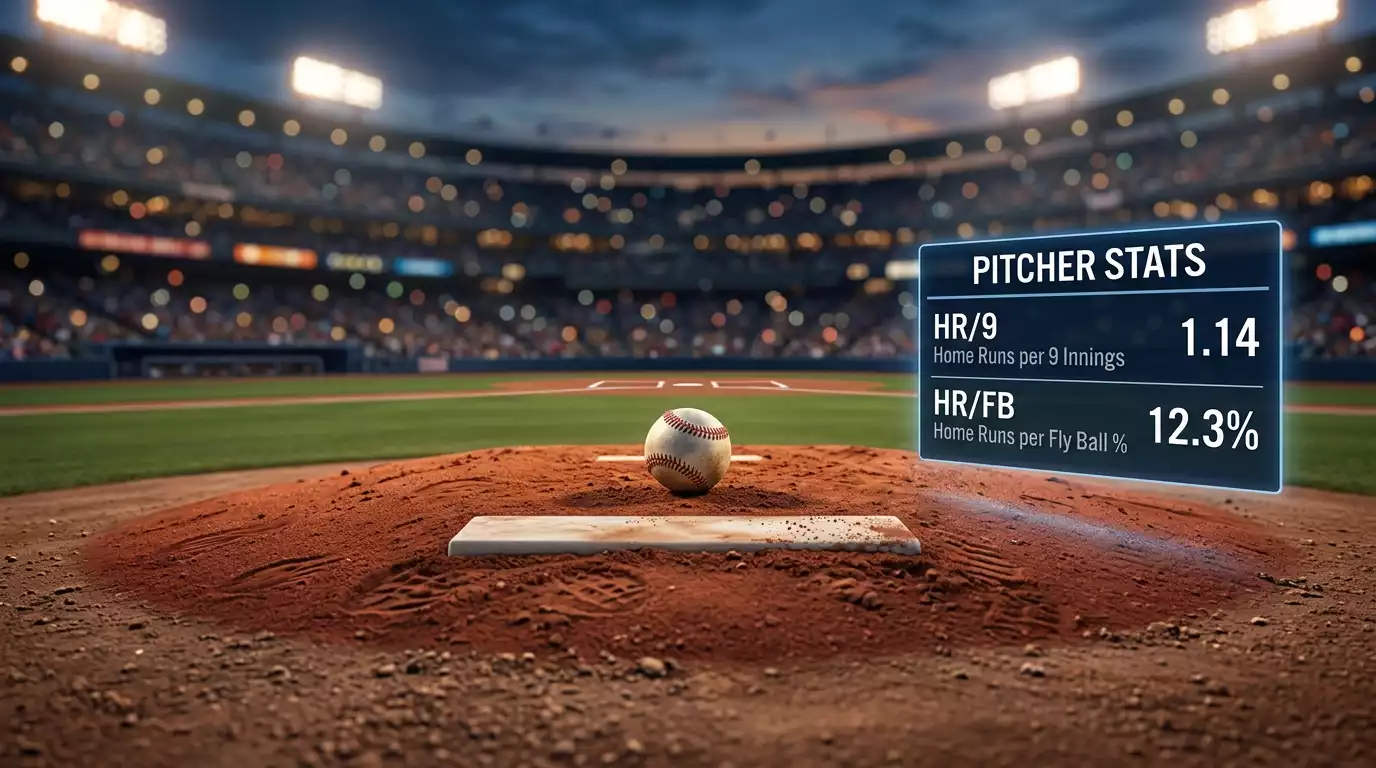
The second box is the opposing pitcher. I am not looking for the guy who allows a lot of home runs. I am looking for the guy who allows a lot of barrels – those balls hit at 98 mph or more with the right launch angle. A pitcher with a healthy strikeout rate but a sky-high barrel rate against will give the slugger fewer chances but make each chance count. That profile is what produces multi-homer games, because the one or two contact at-bats turn into damage at-bats.
The third box is weather. A warm, still afternoon at a hitter-friendly park where the wind blows out is the textbook condition. A cold April night in Cleveland with a 12 mph wind in from centre is not. I will dig into the specific maths in the weather pieces, but the directional signal is enough to gate this checklist.
The fourth box is lineup context. The hitter needs to be batting in a position with high plate-appearance volume. A two-hole slugger getting four guaranteed PAs and a likely fifth is a different bet from a six-hole batter who gets three. One extra plate appearance on a 6% per-PA HR rate adds roughly six percentage points to the probability of multiple homers. That is a meaningful nudge and one most casual bettors completely ignore when they see the same player available across several lineup slots over the course of a season.
How I Stake an Alternate Line Without Going Broke
The variance on alternate lines is brutal even when you are right about the edge. If your true probability is 5% and the price implies 4%, you are sitting on positive expected value, but you will lose 95 times out of 100. That kind of distribution destroys flat-stake punters who are not psychologically prepared for it.
My rule, refined over years of bleeding red on this market, is that alternate home run props live in a separate part of my bankroll, sized at a quarter of what I would put on the standard line. If I would happily put £10 on Judge to hit a home run at +260, I will put £2.50 on Judge 2+ at +1400, and I will absolutely not double up on both legs in the hope that the variance gods smile. They will not.
The other rule is to never parlay alternate HR legs together. Two 2+ legs at +1400 each looks like a +20,000 dream ticket, and the maths makes it look like a bargain. It is not. The events are not perfectly independent – both hitters benefit from warm weather, hitter-friendly parks, and certain pitch types – but the correlation is nowhere near strong enough to recover the multiplied operator hold. I have run the back-tests. Those tickets are graveyards.
Where the Real Edge Lives on This Market
If you have read this far you might be wondering whether the 2+ market is ever worth playing at all. It is, but rarely, and almost never on the names you first think of. The edge lives in two specific places, and both require you to know more about the underlying lineup than the trader pricing the board.
The first is platoon-mismatch alternates. When a left-handed slugger draws a soft right-hander at a park that plays huge to the pull side – Yankee Stadium short porch, T-Mobile Park’s lefty corner – the standard line tends to get pulled in tight by the public. The 2+ line, however, is priced more by formula and less by handle. That gap is where I look first on any slate.
The second is what I think of as the “rest day rebound”. A slugger who has just come off a forced day of rest, especially one with a track record of producing extra-base hits in his return games, often draws a price on the standard market that already reflects the soft public bump. The 2+ line, again, lags. The traders reset the probabilities mechanically, and the alternate becomes a quietly reasonable shot.
Beyond those two windows, treat the 2+ market like a high-volatility lottery ticket. It is fun, it scratches the itch when you have a strong opinion, and it occasionally produces a story you tell at the pub for years. But your steady money should still go on the standard market, and your alternate plays should be small, considered, and rare.
The One Question Every Punter Should Ask Before Tapping the Slip
Before I confirm any alternate home run ticket, I ask myself a simple question: am I betting on this because I have a reason the standard line is wrong, or am I betting on it because the bigger number feels exciting? If the honest answer is the second one, I close the slip. The discipline does not feel heroic in the moment – it feels like leaving money on the table, especially when the player you skipped goes deep twice that night and your phone lights up with the “could have been” notification. But over a thousand decisions, the punters who only fire when the standard line is mispriced finish well ahead of the punters who chase the lottery prices. The maths is unforgiving in both directions.
What is the difference between a ‘to hit a home run’ prop and an ‘alternate 2+ home run’ line?
The standard prop pays out if the player hits at least one home run in the game. The alternate 2+ line only pays if they hit at least two. Because multiple home runs in a single game are roughly six to seven times rarer than one, the price on 2+ is usually around five to six times longer. The two markets answer different statistical questions and should be staked very differently.
How often does any MLB player actually hit two home runs in one game?
Across a full season, multi-homer games happen roughly once or twice per slate of fifteen games, and they cluster heavily around elite power hitters at hitter-friendly parks. Even sluggers with 50-plus home run pace produce two-homer games in only six to seven percent of their starts. That rarity is why alternate lines carry such steep prices and why staking them small is non-negotiable.
Written by the editors at mlb Prop Bets Home Runs.