Behind the November 2025 $200 Prop Limit: What Got Banned, What Survived
 Available in US
The November 2025 prop limit was one of the most significant operator-side regulatory responses in the modern era of US sports betting, and although it does not apply to UK punters directly, the structural reasons it exists matter for anyone betting MLB props anywhere. The limit was a reaction to a specific scandal, but the deeper logic – that micro-prop markets on individual pitches and player actions create integrity risks that a $200 ceiling can partially mitigate – applies to any sports betting market that allows wagers on player-controlled outcomes. UK punters need to understand the limit not because it caps their stakes but because the same logic is increasingly shaping which markets UK operators offer and how they police them. This is the deeper dive.
The Limit and What Triggered It
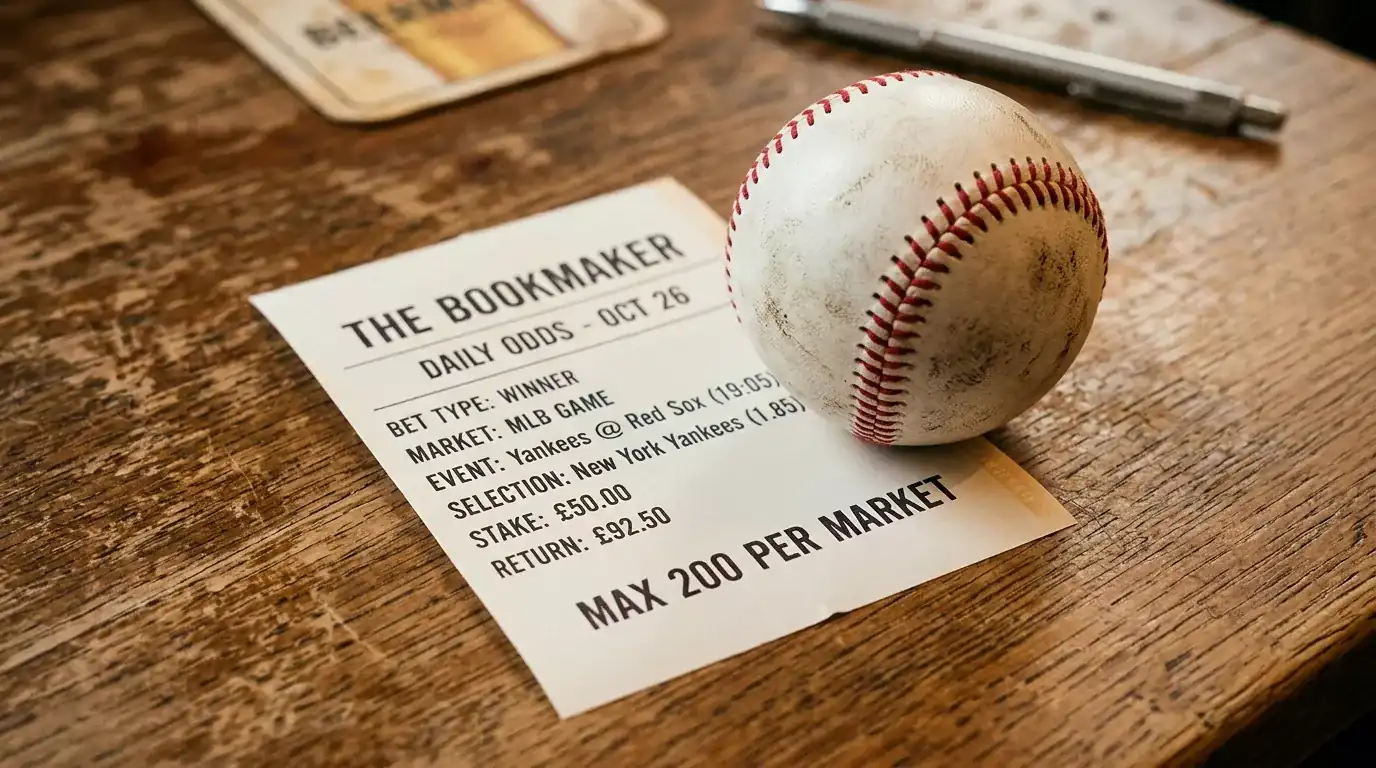
The basic facts. In November 2025 leading US bookmakers introduced a national $200 cap on bets on individual pitches and prohibited their inclusion in parlays – a reaction to the scandal involving Cleveland Guardians pitchers Clase and Ortiz. The scandal involved alleged manipulation of specific pitch outcomes by players in exchange for bribes from external bettors who were exploiting the unlimited stake limits on micro-prop markets. The integrity exposure that produced the scandal was structural: micro-prop markets on individual pitches gave players inside information that could be monetised at scale, with stake sizes on individual bets that could justify the corruption.
The $200 cap was the operators’ attempt to make the markets uneconomic for that kind of corruption while preserving them as recreational products. At $200 per pitch, the upside on manipulating an individual pitch outcome is too small to compensate the player taking the risk, even if the bet collects multiple times. The cap is not perfect protection, but it raised the cost of corruption substantially enough that the operators could continue offering the markets at all.
Why the Limit Was Necessary
The vulnerability that enabled the Clase-Ortiz scandal was structural rather than incidental. Micro-prop markets – bets on whether a specific pitch will be a strike, a ball, in the dirt, in the strike zone – are unusually susceptible to player manipulation because the player has direct control over the outcome and the outcome is verifiable in real time. Other markets in baseball – to-hit-a-HR, total runs, moneyline outcomes – depend on too many uncontrolled variables for any individual player to manipulate reliably. Micro-pitch markets do not.
That structural difference means micro-prop markets carry an integrity risk that the rest of the baseball betting market does not. The risk had been latent for several years as these markets proliferated; the Clase-Ortiz scandal materialised it. The $200 cap was the operators’ acknowledgement that the structural risk required a structural response.
The Commissioner’s Position
Rob Manfred has been consistent on the integrity framework that the $200 cap fits within. “I think that the most important undertaking and really the bedrock of our relationship with the sportsbooks is the ability to monitor betting activity. The ability to discern inappropriate patterns is really, really important.” That position frames the cap as part of a broader integrity framework rather than a one-off response.
The deeper integrity logic that Manfred has articulated involves data access. “Once you’re in that environment where sports betting is happening, the crucial issue is access to data. That means you have to have a relationship with the sportsbooks.” The data-sharing relationships with sportsbooks allow MLB to detect manipulation patterns that would otherwise be invisible to either party alone. The $200 cap is one part of that architecture; the data-sharing is the other.
Did the Cap Reach UK Markets
The honest answer is partially, in modified form. UK operators were not directly subject to the November 2025 prop limit, which applied to US-licensed sportsbooks. But the structural logic behind the cap influenced UK operator behaviour in subtle ways. Most UK operators do not offer micro-pitch markets at all on MLB – the demand from UK punters is too low to justify the operational complexity, and the integrity exposure that the US scandal exposed makes the markets unattractive to add. So the practical effect on UK punters was that micro-pitch markets remained absent rather than newly capped.
Where the influence shows up more clearly is in the broader UK approach to player-controlled prop markets. UK operators have become more cautious about offering tightly-defined player-action markets – first-pitch outcomes, specific strikeout situations, pitch-by-pitch markets in any sport – since the Clase-Ortiz scandal. The integrity-driven hesitation is industry-wide rather than US-only.
What Survived in the US Market
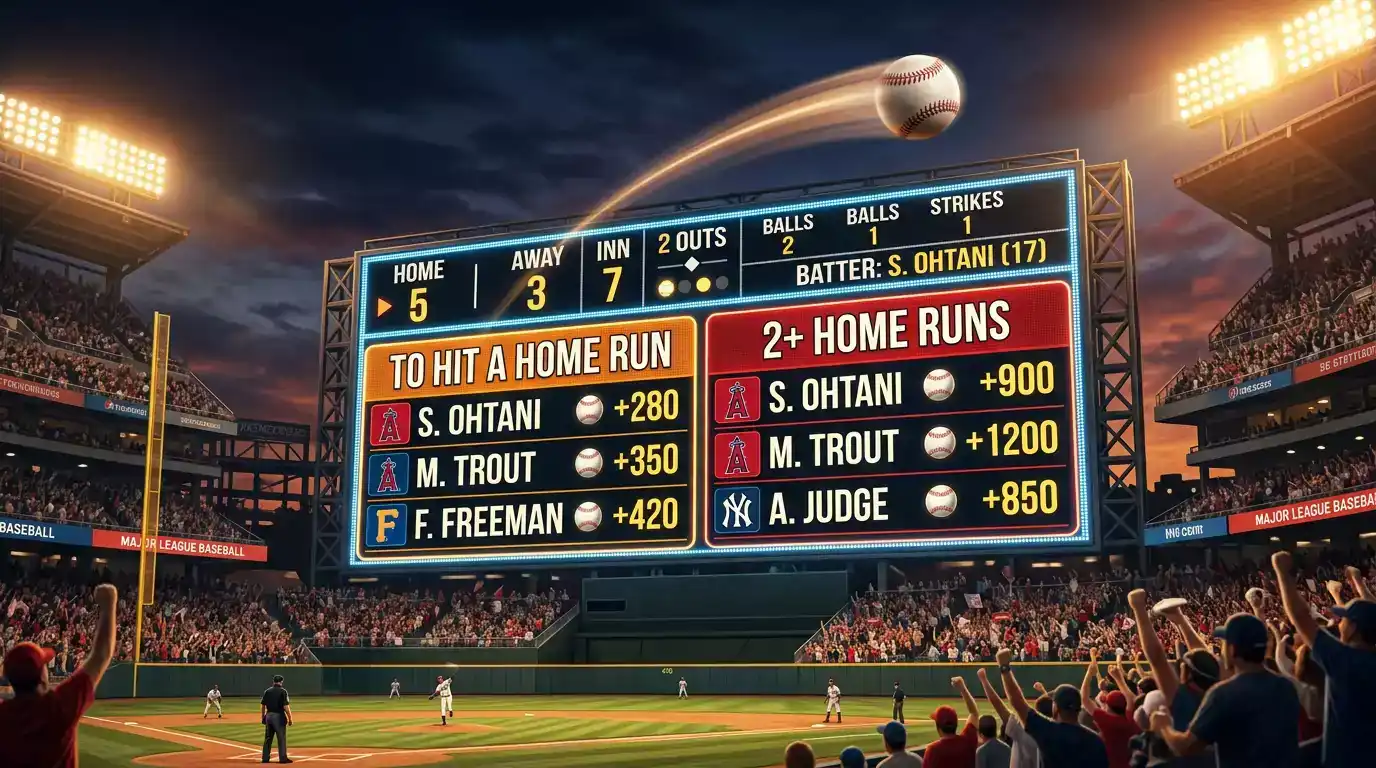
The standard MLB prop markets – to-hit-a-HR, total bases, RBI, run-scored – survived the November 2025 cap entirely intact. The cap targeted micro-pitch markets specifically, not the broader prop ecosystem. HR props, in particular, were never the integrity concern. The variables that drive a HR – pitcher’s choice of pitch, hitter’s swing decision, weather, park, defensive positioning – are too distributed across multiple actors and uncontrolled inputs for any single player to manipulate reliably.
The result is that the bulk of MLB prop activity, including the markets UK punters care about, was unaffected by the cap. The $200 limit drew a line specifically around the player-controllable micro-markets and left the broader prop space alone. That is the right structural response – targeted protection rather than broad restriction – and it preserved the recreational market while addressing the specific integrity vulnerability.
The Polymarket Comparison
The integrity framework around micro-markets is also why the MLB-Polymarket partnership has been structured so carefully. MLB and Polymarket signed a multi-year exclusive contract on 19 March 2026 estimated at $300m over 3 years, with Polymarket becoming the “Official Prediction Market Exchange” of MLB. The structure of the partnership reflects the same lessons the November 2025 cap embodied.
Specifically, the Polymarket-MLB integrity framework restricts markets on individual pitches, manager decisions, and umpire performance. Those restrictions are direct consequences of the micro-market integrity logic. Polymarket is allowed to offer markets on game outcomes, season-long awards, and other distributed-outcome markets; it is not allowed to offer the kind of player-controllable micro-markets that produced the Clase-Ortiz scandal.
That structure is meaningful for UK punters because it suggests where prediction-market expansion is heading globally. The integrity-driven exclusion of player-controllable markets is becoming an industry standard, not just a US-specific response. UK punters who want to understand the trajectory of MLB-related betting markets across all jurisdictions should expect to see similar restrictions extended to other prediction-market platforms over the next several years. How Polymarket, the CFTC, and UK access actually interact for prediction-market customers covers the practical UK side of that broader trajectory.
What the Cap Did Not Solve
The $200 cap addressed the most acute integrity exposure but did not eliminate the broader risk. Player-prop markets in other sports – basketball points, hockey goals, football yards – carry similar structural vulnerabilities, and the cap on baseball micro-pitches does not extend to those. Several US college sports prop markets remain particularly exposed because the underlying athletes have weaker financial positions than MLB players and may be more susceptible to manipulation pressure.
The broader response from US sports leagues and operators has been to extend the same logic – tighter caps on individual-controllable markets, deeper data-sharing relationships, more aggressive monitoring – across other sports incrementally. The trajectory is toward a more integrity-focused industry overall, with the MLB cap representing one milestone in a multi-year process rather than a final answer.
How UK Punters Should Read the Trajectory
Several practical implications. First, the MLB markets UK punters bet are mostly safe from this kind of restriction because they are distributed-outcome markets that the integrity framework does not target. To-hit-a-HR, total bases, RBI markets – none of these are at risk of being capped or removed for integrity reasons.
Second, UK punters who occasionally encounter player-action micro-markets – first-pitch outcomes, in-game pitch-by-pitch markets – should expect those markets to disappear or be restricted across UK operators over the next several years. The integrity logic is industry-wide and the trajectory is toward narrower availability.
Third, the broader regulatory framework around prediction markets and unconventional betting platforms is being shaped by exactly the same integrity considerations that produced the November 2025 cap. UK punters interested in non-traditional betting platforms should expect those platforms to operate under similar restrictions on player-controllable markets.
The Operator-Side Discipline
One final dimension of the cap that deserves attention: the November 2025 response came from the operators themselves, not from regulators directly. The major US sportsbooks coordinated to introduce the cap voluntarily, before regulators imposed mandatory restrictions. That self-policing dynamic is part of the modern industry’s regulatory equilibrium – operators preempt regulatory action by adjusting practices proactively, which keeps the regulatory framework lighter-touch than it would be if every change had to be mandated.
For UK punters, the implication is that operator-side caps and restrictions can appear quickly when integrity exposure becomes acute, without requiring regulatory action first. Expecting future caps and market restrictions to come from the operators rather than from regulators is the right base case for the rest of this decade.
The Long View
The November 2025 cap will be remembered as a structural milestone in the modern era of MLB-related betting. It established the principle that micro-markets on player-controllable outcomes carry distinct integrity risks that the broader market does not, and that those risks justify tighter caps and exclusions even at the cost of some recreational appeal. The principle is now embedded in the industry, and the lessons from this period will shape sports betting product design for years to come.
UK punters benefit indirectly. The integrity framework that produced the cap is the same framework keeping the broader UK MLB betting environment relatively clean. The cost of the framework – narrower availability of certain market types – is small compared with the integrity protection it provides for the markets that remain. That trade-off is one most UK punters will accept readily once they understand what is being protected and how.
Did the $200 cap reach UK markets?
Not directly. The November 2025 cap applied to US-licensed sportsbooks only. UK operators were not subject to the cap because they generally do not offer micro-pitch markets in the first place – the UK demand for such markets is too low to justify the operational complexity. The integrity logic behind the cap, however, has influenced UK operator behaviour in making them more cautious about adding tightly-defined player-action markets across all sports.
What MLB prop markets were affected by the cap?
The cap targeted micro-pitch markets specifically – bets on whether a specific pitch would be a strike, ball, in the dirt, or similar. Standard MLB prop markets including to-hit-a-HR, total bases, RBI, runs scored, and the broader prop ecosystem were unaffected and continue to operate normally. The cap drew a structural line around player-controllable micro-markets without restricting the broader recreational prop space.
Will similar caps come to other sports?
Probably yes, incrementally. The integrity logic that justified the MLB cap applies to any player-controllable micro-market in any sport. US college sports prop markets, in particular, are seen as carrying similar exposure because the athletes’ financial positions make manipulation pressure more acute. The broader trajectory is toward tighter caps and exclusions on player-controllable markets across multiple sports over the next several years.
Written by the editors at mlb Prop Bets Home Runs.